
I’ll explain what happened at the trial of Judge Hannah Dugan, the charges she faced, key testimony the jury heard, the jury’s decision, and the immediate aftermath for the judge and the migrant involved.
The federal trial of Judge Hannah Dugan centered on accusations that she obstructed federal agents who were taking an undocumented man into custody after a court appearance. The allegations drew national attention because they involve a sitting judge and questions about how courthouse staff should interact with immigration enforcement. The case highlighted tensions between local courthouse practices and federal immigration operations, and it tested what actions cross the line into criminal obstruction.
The government presented a straightforward theory: prosecutors said Dugan deliberately moved the migrant’s case ahead, offered him a Zoom option, and then led him out a private door to prevent agents from arresting him. Testimony described an FBI agent who said that after agents left the corridor, the judge “immediately moved Flores-Ruiz’s case to the top of her docket, told him that he could appear for his next hearing via Zoom and led him out the private door.” That sequence of actions was central to the felony obstruction charge the judge faced.
An FBI agent who led the investigation testified that after agents left the corridor, she immediately moved Flores-Ruiz’s case to the top of her docket, told him that he could appear for his next hearing via Zoom and led him out the private door.
Prosecutors also played audio recordings from her courtroom in which she can be heard telling her court reporter that she’d take “the heat” for leading Flores-Ruiz out the back.
Her attorneys countered that she was trying to follow courthouse protocols that called for court employees to report any immigration agents to their supervisors and she didn’t intentionally try to obstruct the arrest team.
Prosecutors reinforced their case with audio from the courtroom and testimony from 19 witnesses, including federal agents and a fellow judge. Defense lawyers pushed back, arguing Dugan was following courthouse procedures that require staff to notify supervisors when immigration agents are present. They maintained she had no intent to obstruct and that her actions were in line with internal protocols, not a plot to hide someone from law enforcement.
During deliberations the jury asked two narrow questions about ICE procedures and whether Dugan had to know who was being arrested before she could be charged. That line of inquiry shows jurors were trying to pin down mens rea, the intent element that often decides obstruction cases. The defense called only a few witnesses, including two judges, a public defender, and a longtime friend, while Dugan chose not to testify in her own defense.
During their first house of deliberations, the jury had two questions: one about ICE regulations and who needed to be told when agents were making an arrest. The second question was if Dugan needed to know who was being arrested. [….]
The government brought in 19 witnesses, ranging from federal agents to a fellow judge. The defense called two fellow judges, a public defender and former Mayor Tom Barrett, a longtime friend. Dugan herself did not take the stand.
After the defense rested, the case went to the jury and they returned a mixed verdict within about six hours. Jurors found Dugan guilty of the felony obstruction charge but acquitted her on the misdemeanor concealment count. The split verdict suggests jurors believed some interference occurred but did not find proof that she concealed the individual with intent to prevent arrest.
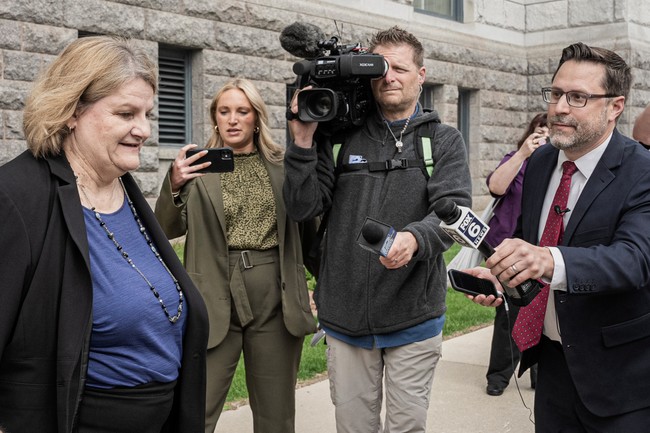
The scene after the verdict was tense and brief. Reports say Dugan and her lawyers “left the courtroom, ducked into a side conference room, and closed the door without speaking to reporters.” That reaction underscored the personal and professional stakes she now faces, including potential sentencing on a felony conviction and the public scrutiny that comes with it.
The migrant at the center of the case, Eduardo Flores-Ruiz, was nonetheless apprehended and ultimately deported in November. His deportation means he is no longer in the jurisdiction and removes one practical source of ongoing courtroom complications, though it does not erase the legal consequences Dugan now confronts. The case will likely continue to ripple through conversations about how judges and courthouse staff should coordinate with federal immigration authorities.



Add comment