
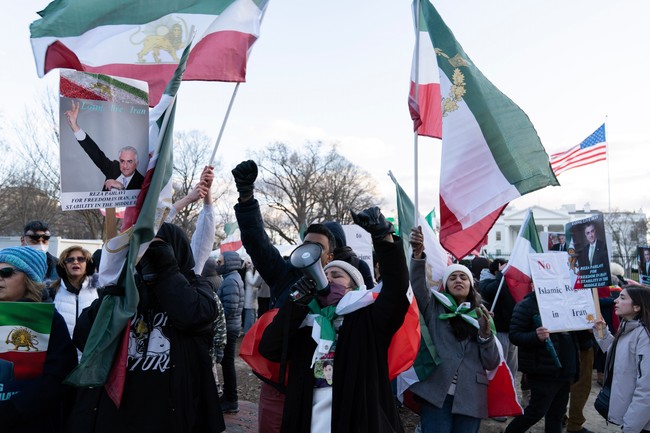
The United States moved Friday to sanction Iranian officials tied to the violent suppression of nationwide protests, targeting individuals and financial networks blamed for fueling the crackdown and for siphoning Iran’s wealth abroad. These measures, announced by the State Department and the Treasury, aim to choke off assets, limit travel, and pressure the regime that prioritized foreign adventurism over basic needs for its people. The designations include ministers, security figures, an investor accused of laundering oil revenue, and related digital asset exchanges. The actions come amid sharply divergent death toll estimates and widening international coordination, including steps by the European Union and Iranian threats of retaliation.
The Treasury’s list singles out six officials said to have overseen security forces during protests that erupted in late December over economic collapse and broader political grievances. Among those named is Eskandar Momeni Kalagari, identified as Iran’s Minister of the Interior who supervises the Law Enforcement Forces. Also sanctioned is Ali Larijani, Secretary of the Supreme Council for National Security, accused by officials of calling for force against demonstrators early in the unrest. The package includes Babak Morteza Zanjani, an investor accused of embezzling billions in oil revenue and of funding projects tied to the Islamic Revolutionary Guard Corps.
Along with individuals, the designations extend to two digital asset exchanges linked to Zanjani that reportedly processed large volumes of funds for IRGC-linked entities. The point is blunt: target the people and the channels that bankroll the regime’s repressive apparatus. Treasury officials described the aim as cutting off corrupt elites and shadow networks that enrich themselves while Iranians face shortages and economic collapse.
Accurate casualty counts are hard to establish because the regime has restricted internet access and communications across much of the country. Different monitoring groups have produced widely varying figures, with some activist networks reporting at least 6,126 killed and media-cited compilations suggesting numbers that could be considerably higher. The Iranian government’s own count stands at 3,117, claiming portions of that total were terrorists rather than civilians. Those discrepancies highlight the opacity of a state trying to control the narrative while silencing witnesses.
The protests began after the rial plunged to record lows on unofficial markets, reflecting decades of mismanagement made worse by sanctions and corruption. The State Department framed U.S. sympathy for demonstrators as opposition to “47 years of catastrophic economic mismanagement,” noting the regime prefers to fund proxy militias and weapons programs rather than provide for water, electricity, and basic services. Treasury statements added that Iranians suffer rising inflation and crumbling infrastructure because the regime is “squandering their wealth on its malign activities.”
The sanctions work by denying designated individuals and entities access to property or financial assets in the United States, curtailing travel, and blocking U.S. persons and companies from doing business with them. Treasury Secretary Scott Bessent said the department “will continue to target Iranian networks and corrupt elites that enrich themselves at the expense of the Iranian people.” The measures invoke multiple executive orders tied to human rights abuses, counterterrorism, and restrictions on Iran’s petroleum and petrochemical sectors.
The European Union moved in parallel, imposing sanctions against Momeni and other judicial and security officials deemed responsible for the violent repression of peaceful protests. European officials said those targeted “were all involved in the violent repression of peaceful protests and the arbitrary arrest of political activists and human rights defenders.” That coordination increases pressure and narrows safe havens for the regime’s financial and travel networks.
In response to the sanctions, Iran signaled plans to label the militaries of some EU countries as terrorist organizations, a post on X by Ali Larijani indicated, and the Iranian parliament is reportedly poised to take related measures. Such retaliation gestures look intended for domestic consumption and diplomatic posturing, rather than a genuine counterbalance to coordinated Western financial measures. Meanwhile, Washington also revoked travel privileges for senior Iranian officials and their families as an added consequence for the crackdown.
The sanctions also target an extended shadow banking apparatus alleged to have laundered proceeds from Iranian oil sales to foreign markets. Eighteen individuals and entities are named for participation in those networks, a move designed to choke off revenue streams that bankroll regional aggression and internal repression. The State Department reiterated commitment to National Security Presidential Memorandum 2, which directs maximum pressure to deprive the regime of funds used for destabilizing actions and support for proxies abroad.
From a Republican viewpoint, these steps underline a straightforward policy priority: hold Tehran accountable, deprive the regime of resources for repression, and stand with ordinary Iranians suffering under kleptocracy. Sanctions are blunt, but they signal that the world will not accept impunity for state-sponsored violence or the theft of a nation’s wealth by its rulers. How effectively those measures change behavior depends on follow-through and international cooperation to close loopholes and enforce designations.
Add comment