
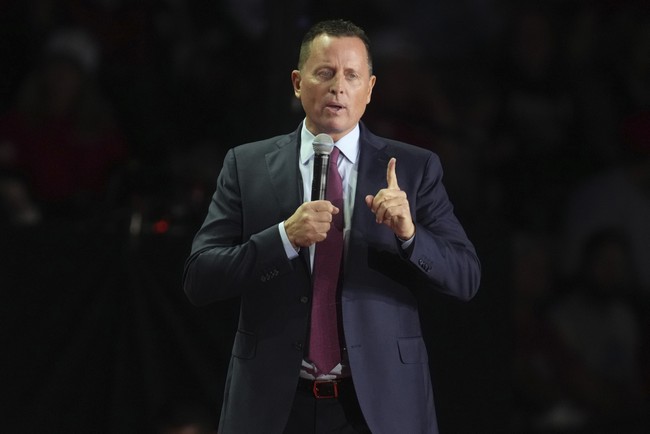
Checklist: clarify the dispute, outline Grenell’s rebuttal, highlight financial claims about the Kennedy Center, preserve direct quotes and embeds, note Grenell’s legal warning.
Richard Grenell, now interim president of the John F. Kennedy Center for the Performing Arts, fired back hard after Senator Sheldon Whitehouse published what Grenell says are false and partisan claims about the Center’s finances and management. Grenell used his social posts and an attached letter to correct the record, listing specific financial changes and accusing Whitehouse of relying on anonymous gossip and partisan reporters. The clash escalated when Grenell warned he would sue major outlets that repeat the allegedly false story. The dispute centers on donor money, board costs, and how previous leadership ran the institution’s finances.
Grenell opened by saying the criticism was careless and unvetted, insisting the senator’s letter lacked basic fact-checking. He said the staff behind Whitehouse’s letter depended on anonymous sources and inaccurate gossip instead of reviewing the data. Grenell framed his response as a professional defense of both his team and the institution’s finances, not a partisan rant. He emphasized that the facts lie in budgets and financial records that he is willing to share.
In his social post, Grenell touted a balanced budget and a major fundraising haul, noting, “We have a balanced budget, we’ve raised a whopping $117 MILLION under” and then naming the administration associated with that fundraising. He also argued that major events, like a FIFA-related engagement, were treated as sponsorships rather than simple rentals, calling a newspaper’s opposite assumption “a gigantic mistake.” Those points form the spine of his rebuttal and aim to undercut claims that the Center’s leadership is financially reckless.
The letter Grenell attached to his post gets more specific. He accused Senator Whitehouse of signing a letter filled with partisan attacks and false accusations and insisted the senator’s staff never reached out to the Kennedy Center for the underlying data. Grenell made clear he believes the senator’s team relied on hearsay instead of documents, and he set out to offer the facts in written form. His tone mixes defensive precision with a sharp political bite.
Dear Senator Whitehouse:
I am concerned about your careless attacks on me and my team. The letter you signed did not undergo basic fact-checking. It is filled with partisan attacks and false accusations. Your staff relied on anonymous sources, inaccurate gossip, and allegations from partisan reporters who never had access to the data or facts I’m happy to provide below.
Grenell then drills into operational details he says show a turnaround since new leadership arrived. He claims donor dollars were previously bleeding away and that executive pay ran between $400,000 and $700,000 for top officers. According to his letter, those compensation levels and lax approval processes created financial chaos that the new leadership has since ended. Departments must now submit business plans for new positions so the Finance department can enforce discipline and curb unnecessary staff costs.
The letter offers another striking example about board meeting expenses, saying past leadership once spent more than $120,000 to hold a single meeting. Grenell contrasts that with the current approach, where board meetings now cost a fraction of that amount, and the next meeting will reportedly be hosted by a board member at no cost. He pointedly notes Senator Whitehouse has not attended a board meeting under the new leadership, implying the senator’s critique lacks firsthand context.
- Before the arrival of new leadership, the Kennedy Center was hemorrhaging donor dollars. Members of the executive leadership team were paid between $400,000 to $700,000 per year. New leadership has ended the financial chaos. If any department wants to create a new position, they must first submit a business plan to the Finance department to enforce financial responsibility and curb unnecessary staff costs.
- The cost of convening a single board meeting under previous leadership was over $120,000 in expenses. Today, it’s a fraction of that cost, with the next Board meeting being hosted by a Board member at no cost to us. While you enjoyed those previous exorbitant Board meetings, you have not attended one under the new leadership.
Grenell’s rhetoric turns sharply political when he accuses the senator of letting partisan animus drive his claims, labeling the attacks as symptomatic of “Trump Derangement Syndrome” affecting those who associate with the former president. That language pushes the exchange out of a narrow fiscal quarrel and into the larger partisan battlefield. The back-and-forth shows how cultural and political tensions now influence scrutiny of public cultural institutions.
Later, Grenell doubled down with another social post that included a legal warning, saying he “will sue” a major national newspaper if it refuses to correct the record and that the threat applies to “anyone else who repeats” the alleged falsehoods. That escalation signals this is not just a media fight but a potential legal confrontation over reputational harm and accuracy. The choice to threaten litigation raises the stakes and suggests Grenell is prepared to enforce what he presents as the factual account.
The developing dispute centers on accountability, transparency, and how to treat past leadership decisions. Both sides are staking claims: Grenell on verifiable financial fixes and strong fund-raising, Whitehouse on alleged mismanagement and cause for oversight. For now, Grenell has framed the matter as a documented correction, and he has made clear he will pursue legal remedies if the narrative he calls false persists.


Add comment