
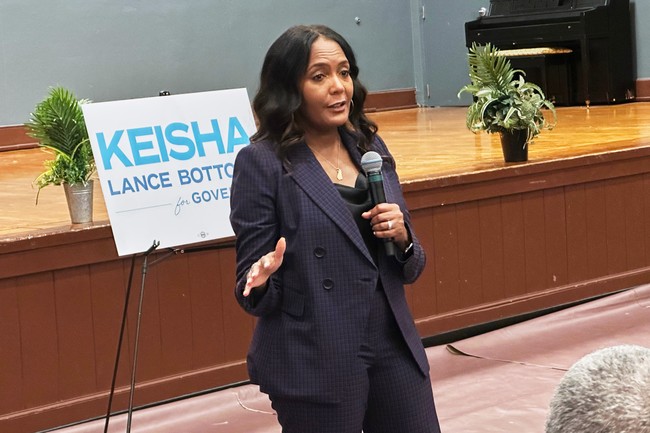
Keisha Lance Bottoms stirred controversy in Georgia by publicly shaming a minority-owned restaurant for hosting Republican Rick Jackson, and her response reveals a wider pattern of political pressure on small business owners and minority communities. This article reviews the incident, the online backlash, the economic stakes for local businesses, and how Jackson’s record contrasts with Bottoms’ rhetoric.
Every election cycle brings heated expectations about where people should stand, but this episode in Atlanta shows how that pressure can turn into real economic harm. A photo of Rick Jackson with a restaurant co-owner sparked calls for a boycott, and what followed exposed how easily political theater can target everyday entrepreneurs. The fallout shows that political posturing can come at the expense of small business livelihoods, especially in communities still recovering from pandemic-era disruptions.
The restaurant at the center of this story is a minority-owned spot in Atlanta where a candidate and an owner posed for a photo. That image was shared on social media and later removed, yet the damage had already begun: activists online called for a boycott and cast the owners as traitors for interacting with a Republican. Instead of calming things, a prominent Democrat weighed in and amplified the backlash.
Keisha Lance Bottoms used her platform to comment on what she framed as a calculated decision by business owners who welcome a Republican candidate. The response was pointed and public, signaling to voters that certain interactions are unacceptable unless they align with party expectations. For many business owners, this kind of political signaling is a lose-lose choice between alienating customers or drawing ire from vocal activists.
“As Governor, I’ll fight for all Georgians, including Tamara, whose story as a successful owner of @toastonlenox is not only inspiring to me, but to anyone looking to create opportunity in our state,” Jackson wrote in his Instagram post where he shared the photo of himself and Young. “Grateful for the time, conversation, and amazing food!”
Bottoms followed the restaurant dust-up by posting a statement and video that linked the candidate’s visits to a pattern of courting minority-owned businesses. Her remarks suggested that business owners who interact with Jackson have weighed the tradeoffs and chosen the risks. By framing the encounter as a tactical choice, she effectively implied that the owners’ livelihoods could be jeopardized by the political optics of the meeting.
Rather than push back against the boycott efforts, Bottoms appeared to amplify the backlash, acknowledging the “online chatter” surrounding Jackson’s visit to “minority-owned businesses” and a “black-owned business owned by a woman.”
Although she did not directly name the restaurant, Bottoms warned that anyone who welcomes Jackson “has made a calculated decision based on the benefits and the risks of doing that.”
Watch:
What makes this worth noting beyond the viral moment is the pattern of economic consequences when politics invades commerce. Past examples have shown that boycotts and corporate punishments can cost local economies millions and disproportionately hit minority-owned businesses that rely on local foot traffic and events. When leaders use their megaphones to shame businesses, they should reckon with the real dollars and jobs at stake.
Here was the full post:
Rick Jackson’s campaign was quick to point out the hypocrisy. Jackson’s record as a successful businessman and employer stands in contrast to the performative outrage of political figures who speak for minority communities while endorsing tactics that can harm them. Voters deserve leaders who support prosperity rather than weaponize outrage for short-term gains.
This episode also highlights a larger point about political freedom in a free market. Business owners should be allowed to interact with customers and public figures without being punished by organized online mobs or pressured by partisan leaders. Georgia’s entrepreneurs need stability and customers, not the unpredictability of politicized boycotts that can be driven by a viral post.
Bottoms’ intervention in this small-business encounter turned a simple photo into a political wedge issue, and it revealed the tension between activist purity and economic reality. Candidates who want to represent whole communities would do better to focus on jobs, growth, and practical support for minority entrepreneurs rather than policing who they meet. At stake here are livelihoods and the principle that commerce should be free from coercive public shaming.
https://x.com/TeamJacksonHQ/status/2079339233278333311?ref_src=twsrc%5Etfw

Add comment