
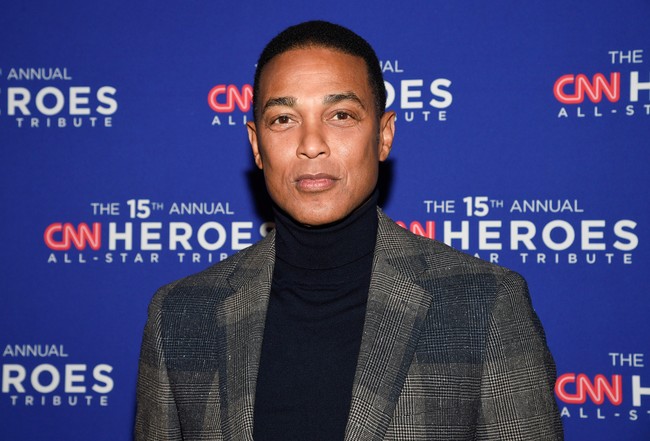
The arrest of Don Lemon after the Minnesota church invasion has ignited fierce debate over whether his actions fall under journalistic protection, with constitutional lawyer Jonathan Turley arguing the courts will look at conduct rather than labels and raising questions about advocacy journalism and the reach of the FACE Act.
The story began when Don Lemon was detained in the aftermath of an anti-ICE group entering a Minnesota church, prompting immediate uproar across media circles and political benches. Initial judicial hesitance gave way to further review after an appeals court found “clear probable cause,” and federal charges soon followed. That sequence of events set the stage for legal and political sparring over where journalism ends and participation begins.
On Fox News’ Will Cain program, Professor Jonathan Turley outlined why the “journalist” defense is complicated in cases like Lemon’s. He emphasized that courts evaluate behavior: labels matter less than actions, and a self-identification as a journalist does not automatically shield someone from liability. Turley pointed out that activist groups have often used such designations to justify conduct that courts later scrutinize.
…[T]he self-described “journalist” has been arrested for his part in allegedly storming a church, harassing congregants, and refusing to leave when asked by the pastor.
Turley referenced other examples of people claiming observer or journalist status while engaged in protests, noting that such claims are frequently contested in court. He mentioned Renee Good, the person shot by Border Patrol in Minneapolis, as someone who “insisted that she was a legal observer,” but was treated in the investigative record as a participant. The underlying point was clear: courts focus on what an individual actually did, not what they called themselves.
It does apply to places of worship like this and, in fact, when they have applied it to abortion clinics – including Ellison – they have adopted the broadest possible interpretation of those criminal provisions.
Turley laid out a three-point framework for analyzing Lemon’s case: the reason for the arrest, the basis for a finding of probable cause, and the specific conduct cited in any proceeding. Each of those elements matters because they shape how a judge will balance First Amendment protections against alleged criminal behavior. Where a person stands when they cross a physical or legal threshold can be decisive.
He also warned that Lemon stretches the definition of “journalist” by blending advocacy with reportage, an approach Turley described as problematic. The rise of advocacy journalism has blurred boundaries and made legal outcomes less predictable, especially in heated protests where participants and reporters mingle. Turley expects those blurred lines to be litigated more aggressively as cases like this move through the system.
On the political side, Minnesota’s attorney general argued a narrow reading of the FACE Act, suggesting it was aimed at abortion clinics, but Turley disagreed and pointed to broader applications. When authorities have applied those criminal provisions in the past, they often interpreted the statute widely, especially in high-profile interventions. That inconsistency feeds public skepticism about selective enforcement and political motives.
Social media reactions ranged from frantic defenses of Lemon to claims that law enforcement overreached, reflecting a polarized landscape where legal questions are quickly folded into political narratives. Commentators on both sides seized the moment to argue larger points about free speech, press freedom, and public order. Still, the judicial process will ultimately hinge on what happened at the scene and how prosecutors document it.
The coming hearings will test whether courts accept reporting or observing as a shield when alleged actions cross into harassment, trespass, or interference with worship. Turley suggested judges often avoid “hitting that tripwire” by looking closely at conduct, but he did not rule out the possibility that a well-placed journalistic defense could succeed. For now, attention will stay on how prosecutors set out the factual record and how defense teams frame Lemon’s presence and intent.


Add comment