
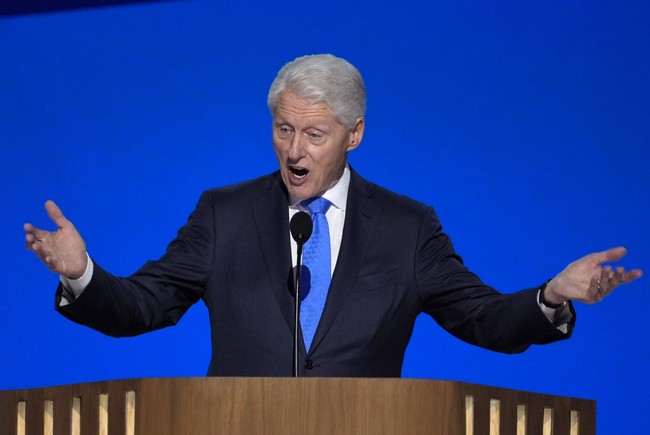
The Department of Justice released a massive trove of material tied to Jeffrey Epstein, and the fallout includes previously unseen photographs of Bill Clinton with Epstein, Ghislaine Maxwell, and others that complicate the Clintons’ effort to avoid in-person testimony; the public record now shows 1,200 victims or relatives identified, extensive flight logs, and contact lists that raise new questions for those who insist they have nothing to hide.
The DOJ review identifies 1,200 victims or relatives, and those names are redacted under the law designed to protect them. At the same time, hundreds of thousands of pages of files were released, covering DOJ records, Epstein flight logs, and contact lists that researchers and committees will comb through. This is not a paper trail that vanishes; it provides leads and visual evidence that will not be easy to explain away.
Among the most striking items now public are photographs featuring Bill Clinton alongside Jeffrey Epstein and Ghislaine Maxwell, plus images of Clinton with women whose faces are redacted. Some images show Clinton in a swimming pool with Maxwell and a redacted individual, others in a hot tub with a redacted person, and additional photos show Clinton with Epstein and well-known figures like Mick Jagger. These images emphasize connections and interactions that cannot be reduced to a single explanation if the committee presses for details.
There are also pictures of Clinton posed with women whose features are deliberately obscured by redactions, which naturally fuels questions about context, timing, and purpose. The material confirms that Clinton flew on Epstein’s plane for trips tied to Clinton Foundation work, but the files also include items with uncertain provenance. That mixture of confirmed travel and ambiguous photographs creates a situation where the Clintons’ narrative will face close scrutiny under oath.
Republicans on the House Oversight Committee have been clear: sworn statements filed in place of in-person depositions are not acceptable when there are outstanding visual and documentary clues that warrant follow-up questioning. Committee Chair James Comer has insisted on in-person testimony so questioning and cross-examination can test claims and dig into inconsistencies. Those photos arriving now make the demand for live depositions even more logical from an oversight perspective.
The timing of the release is politically awkward for the Clintons, who have been fighting subpoenas and seeking to submit sworn statements instead of appearing in person. The depositions were moved to January, but the emergence of previously unseen photos could harden Republican resolve to move forward and, if necessary, pursue contempt. Delays that once bought time may now expose the couple to sharper lines of inquiry.
Comer has signaled he intends to use the newly available material to press for answers, and his position is straightforward: if subpoenaed witnesses refuse to appear, the committee will consider contempt proceedings. That is a normal, focused tool of congressional oversight when document dumps and redactions leave unresolved questions. From a Republican oversight standpoint, insisting on face-to-face testimony is the right way to hold powerful figures accountable.
The scope of material in the release suggests investigators and staff will have months of work ahead of them to parse flight manifests, contact lists, and photographs, and to cross-reference names and dates. This process will likely uncover additional leads and potentially implicate other high-profile individuals who appear in the records. The public should expect a steady stream of disclosures as committees and journalists follow the paper trail.
For the Clintons, the risk is legal and reputational: photos and travel logs create narratives that sworn declarations alone cannot resolve. The committee’s demand for in-person depositions is aimed at turning ambiguous documents into clear testimony under penalty of perjury. Republicans argue that is exactly the point of oversight when the records include so many unresolved items.
The released files are only the beginning; investigators still need to reconcile evidence, interview witnesses, and subpoena additional documents where gaps remain. That work is painstaking, but necessary if the goal is to get to the truth and ensure redactions and delays do not shelter influential people from scrutiny. Expect Republican oversight to proceed methodically and relentlessly where questions remain.
Editor’s Note: President Trump is leading America into the “Golden Age” as Democrats try desperately to stop it.

Add comment