
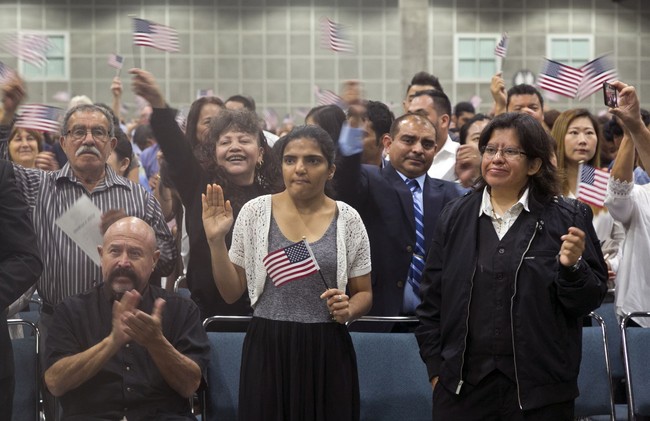
This article examines recent polling on legal immigration in the United States, contrasts those attitudes with opinions on illegal immigration, and discusses how Americans view limits, skills-based priorities, and national sovereignty when it comes to who should be allowed to move here.
Poll: Americans Favor Less Legal Migration, Plurality Demand Cuts or Halt
Recent surveys show a meaningful portion of the public favors cutting legal immigration, and that shift deserves attention beyond the usual headlines. Polling data indicate a two-to-one leaning for reduced legal inflows compared with calls for increasing them, which has real implications for policy debates. These numbers reflect broader anxieties about capacity, culture, and economic impacts. The conversation is shifting from abstract ideals to practical limits.
One poll found that 35 percent of citizens want legalized migration decreased or stopped entirely, while only 18 percent want it increased. Voters across the political spectrum differ sharply: two-thirds of Republicans want legal migration cut or ended, while a minority of Democrats hold the same view. Still, a notable share of Democrats—37 percent in that poll—said they want more legal migration. Those splits highlight how immigration is a partisan issue but not a one-sided public consensus.
Public sentiment on legal immigration is often tangled with feelings about illegal crossings, public services, and jobs. Many Americans perceive that uncontrolled inflows, legal or otherwise, strain schools, hospitals, and housing. That sense of strain drives support for policies that prioritize skills and economic contribution over broad humanitarian intake. Voters are asking for clearer criteria and better enforcement rather than open-ended admission.
Two-thirds of Republicans want legalized migration to be decreased or ended, says a new poll by YouGov.
In contrast, 17 percent of Democrats want legalized migration to be cut back, says the of 1,632 citizens, which was conducted December 11-15.
But 37 percent of Democratic voters want more legal migration, and as does six percent of GOP voters, said the poll.
Amid the partisan polarization, there is a two-to-one plurality for less migration vs more migration. Just 18 percent of citizens want legalized migration to be increased, while 35 percent want it decreased or zeroed.
Twenty-five percent said the number should not be changed, even though establishment outlets rarely described the actual inflow of legalized migrants each year. Under Joe Biden, the inflow of all migrants was roughly level with the number of births.
Arguments in favor of reducing legal immigration often focus on sovereignty and freedom of association: a nation has the right to determine who joins its civic and economic community. That is a fundamental political point, not merely a policy preference. History shows nations have adjusted immigration levels based on labor markets, security, and social cohesion. Americans who favor limits are invoking that same tradition.
Supporters of continued or expanded legal migration stress humanitarian responsibility and the economic benefits of a growing population. They argue immigrants bring labor, innovation, and cultural vitality, and that selective expansion can meet both moral and market needs. Yet a growing share of voters want those benefits to come with stricter screens: language, skills, and an intention to assimilate. That compromise is gaining traction in public opinion.
No country can absorb unlimited newcomers without planning, and polling suggests many Americans understand this basic reality. Preferences for a skills-based system are rising because voters want entrants who fill specific gaps—healthcare workers, engineers, and other in-demand professionals. That approach treats immigration as targeted economic policy rather than a blunt instrument. It also reduces the political friction that happens when communities feel overwhelmed.
Other polls show overwhelming support for the deportation of all illegal migrants who commit major crimes, and a solid majority support for the deportation of all illegal migrants.
Views on illegal immigration remain even tougher than views on legal admission: the public strongly favors enforcement and deportation in many circumstances, especially where crime is involved. That distinction matters politically because it gives policymakers room to design systems that tighten borders while still admitting people who meet clear criteria. Enforcement and selective legal intake can be combined in practical reforms.
Looking ahead, any immigration reform that hopes to win broad public backing will need to answer two questions: how many newcomers can communities realistically absorb, and what standards will ensure those newcomers contribute economically and culturally. Voters are signaling they want numbers tied to needs and clear pathways to assimilation. Policymakers who ignore that mood risk fueling further backlash.


With all of the rampant Demoncrap influx of tens of millions Illegal Invaders there must be a complete freeze on all immigration until those here illegally are removed! Demoncraps and Illegal Invaders don’t have their cake and eat it too!