
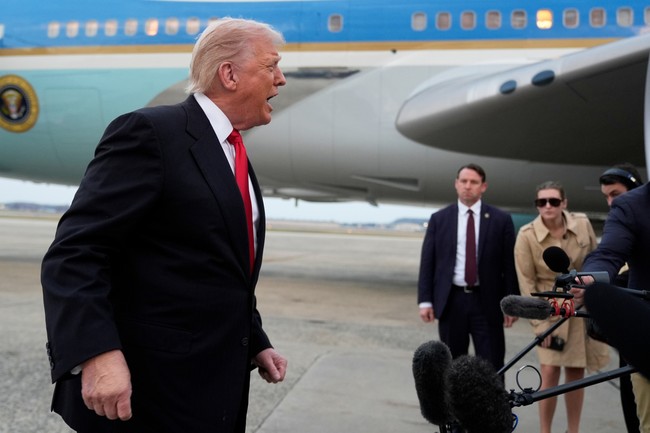
President Trump pushed back hard when a reporter tried to pry details about possible action against Iran, turning a tense briefing into a pointed rebuke that highlighted his record of decisive moves and mocked the media’s evasions.
Priceless: Trump Hilariously Takes Down Reporter on Iran Question
Americans watching unfolding events in Iran want clarity from leaders who actually mean what they say, and President Trump made it clear he does. He reminded reporters that his past actions—targeting key Iranian threats—have real consequences, and he pushed back when a member of the White House pool tried to dodge the basics. The exchange underlined a broader frustration: too many in the media ask questions that ignore context and history. Trump’s blunt response was equal parts policy point and theatrical takedown.
The protests inside Iran and the regime’s violent response have drawn intense public attention, and conservatives are highlighting how different leaders handle red lines. President Trump contrasted his approach with the weak threats of previous administrations, noting tangible results when he ordered operations against Iranian targets. That record is the backbone of his argument that Iran should take him seriously and that deterrence can work without prolonged deployments of U.S. troops. The point was driven home in a short, sharp back-and-forth on his plane.
When a reporter asked about potential retaliatory measures, Trump was quick to close ranks around what he calls red lines and to emphasize discretion. He refused to lay out operational specifics, arguing that speculation can weaken strategy and play into an adversary’s hands. At the same time, he reminded listeners of past moves that sent unmistakable signals to Tehran, including actions aimed at high-value figures and facilities. That history is his proof that talk can mean action when necessary.
Then came the awkward media moment that stole the headlines: a reporter seemed to try to obscure who she worked for before pressing the president for details. The moment escalated into a direct confrontation when Trump repeatedly asked, “Who are you with?” The reporter initially answered, “U.S. White House TV pool. I’m wondering…” and then admitted, “I’m with CNN, sir.” Trump’s reaction was swift and cutting, calling out what he sees as a pattern of evasiveness and labeling the outlet “fake news.” It was short, sharp theater aimed right at how some journalists present themselves.
The exchange did more than embarrass one correspondent; it illustrated how the press pool system can be gamed to shield affiliations, and how that undermines trust in Q and A moments. From the president’s vantage point, transparency about who asks the questions matters because it frames the intent behind them. His critics might call the rebuke theatrical, but supporters will see it as a necessary check on theatrics masquerading as journalism. Either way, the moment reinforced the president’s broader posture toward adversaries and the media.
After the identification snafu, Trump pivoted back to substance and listed actions he believes prove his credibility: the elimination of major threats, hits on facilities tied to nuclear ambitions, and pressure applied to hostile regimes. He framed those moves as the reason Iran should “probably” take him seriously, arguing that deterrence works when backed by demonstrated willingness to act. Then he dismissed the lingering questions with a terse assessment: “What a stupid question.” Those words landed as both a rebuke to the reporter and a signal to Tehran of how he views the situation.
Conservative observers seized on the episode as an example of how leadership and media dynamics intersect in moments of international tension. They argue that decisive, demonstrable policy makes threats credible and reduces the need for public hand-wringing. The president’s performance in the exchange—sharp, unapologetic, and focused on his record—played directly into that narrative. Critics of the media saw in it another reminder that tone and tactics matter during high-stakes reporting.
Beyond the theater of the moment, the substantive point remains: when leaders act with resolve, adversaries reassess their calculations. Trump used the opportunity to remind both the press and international actors of the difference between rhetoric and results. The brief confrontation illustrated how President Trump combines blunt talk with a record of forceful action to shape foreign policy debates. It was a small scene with outsized implications for how deterrence and media accountability are discussed in Washington today.



Add comment