
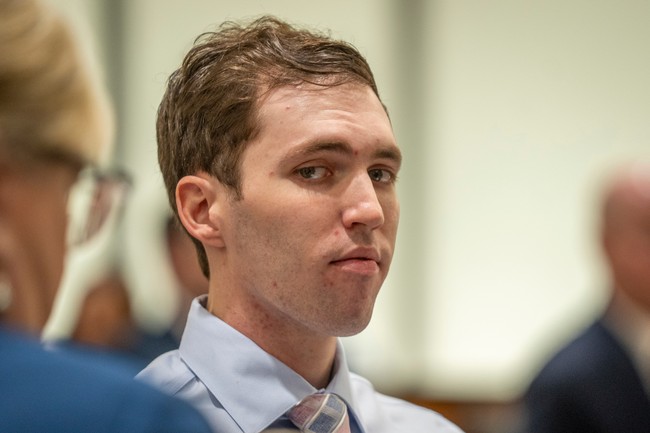
Tyler Robinson, accused in the assassination of Turning Point USA co-founder Charlie Kirk, made his first in-person court appearance in Utah, and the hearing centered on whether cameras and broad media access should be allowed during his trial. The judge balanced concerns about openness with the defendant’s rights after media allegedly captured images that violated a decorum order, and he reserved final decisions on camera access until after further deliberation. Defense attorneys argued that cameras could taint jurors, while media groups pushed back for transparency; the court warned that future violations could end broadcasts. The case remains charged with high emotions, legal maneuvering over publicity rules, and an expected ruling on access by February 2026.
The courthouse appearance was Robinson’s first in person, attended by his parents, brother, and heightened security from nine Utah County Sheriff’s deputies. Prior proceedings had been handled remotely, so his physical presence drew immediate attention to courtroom procedure and optics. Defense counsel had previously asked that he be allowed to wear street clothes at hearings and trial, a request granted, while the judge insisted on shackles for safety. That mix—street clothes but restraints—became a focal point when images of the shackles surfaced during live coverage.
The hearing was only briefly open to public, as 4th District Judge Tony Graf explained he will be hearing arguments on three issues: a request from the media for access to what occurred during a closed hearing on Oct. 22; a request from prosecutors to amend or clarify the publicity or “gag” order in the case, which governs attorneys and the media; and a request from a group of news organizations, spearheaded by The Salt Lake Tribune, who have asked Graf to allow them to weigh in on any closure requests or any other proposed limitations.
Defense lawyers and the sheriff’s office jointly asked that cameras be kept out during trial, arguing the visual record could influence jurors and undermine Robinson’s right to a fair trial. A coalition of national and local news organizations pushed back, retaining legal intervention to press for public access and to contest closures. Jeff Hunt, representing the media group, attended the hearing and emphasized the need to follow pool rules after an inadvertent exposure of the restraints. The judge responded by clarifying rules for transmission and camera placement rather than immediately banning coverage.
The man accused of assassinating conservative activist Charlie Kirk in the middle of a college event looked calm and chuckled with his lawyers as he appeared for the first time in person in a Utah court — with his family in the gallery.
Tyler Robinson, 22, was brought into the Provo courtroom wearing a simple blue button down and tie as his lawyers prepared to argue that media shouldn’t be allowed to film his hearings by claiming they could potentially taint a jury.
Judge Tony Graf allowed cameras to film for part of Thursday’s proceedings. The judge said he would hear from both sides behind closed doors and then open the courtroom back up to the public afterward. Even Robinson’s family was barred from the secret hearing, despite his lawyers request the kin be allowed to remain.
Robinson looked calm behind the defendant’s table flanked by his attorneys, and even smiled as he appeared to whisper joking comments to one before the hearing began.
After an initial public segment, Judge Graf called a closed session with state prosecutors, Robinson, and defense counsel to address sensitive matters and evidentiary questions. When the court resumed in public, the alleged breach of the standing decorum order was raised: pool cameras and live streams had shown shackles and, according to defense lawyers, captured audio and images from counsel tables. Hunt acknowledged pool footage had inadvertently recorded restraints and said pool representatives agreed to exclude those shots from distribution going forward.
Judge Graf ruled the decorum order had been violated but judged that cutting off media coverage entirely would be disproportionate at this stage. He reiterated strict rules: broadcasts cannot begin before court is in session and must stop when court adjourns, and cameras were ordered moved away from the defense table. Graf warned explicitly that further violations could prompt the court to terminate live transmissions of proceedings.
“This court takes this very seriously. While the court believes in openness and transparency it needs to be balanced by the constitutional rights of all parties,” Graf said.
Both sides presented arguments on camera access and publicity limits, with prosecutors, defense lawyers, and media counsel outlining their positions. The judge said he would deliberate and aim to issue a ruling on these issues by February 2026. Meanwhile, the legal calendar will proceed with the case’s severe charges and with courtroom conduct tightly policed to protect fair trial concerns.
Robinson is facing charges of aggravated murder, felony discharge of a firearm causing serious bodily injury, obstruction of justice, two counts of witness tampering and commission of a violent offense in the presence of a child.
From a conservative perspective, transparency matters especially when a high-profile political assassination is involved, and many Republican voices argue for cameras so the public can see how the justice system handles this brutal crime. Charlie Kirk’s widow publicly called for televised proceedings so Americans could witness the legal process and “see what true evil is.” If cameras are allowed, the court will need tight rules to prevent sensationalism while preserving public oversight.
Robinson’s demeanor at the defense table—sometimes smirking and at other times detached—fuels the debate about whether televised moments will influence public perception before jurors ever hear evidence. Defense attorneys will likely seek to manage his courtroom presence if cameras are permitted, but prosecutors and many conservatives contend that openness helps hold the system accountable. The court’s upcoming decisions will set the tone for how this politicized, painful case is presented to the nation.
WATCH:
Add comment