
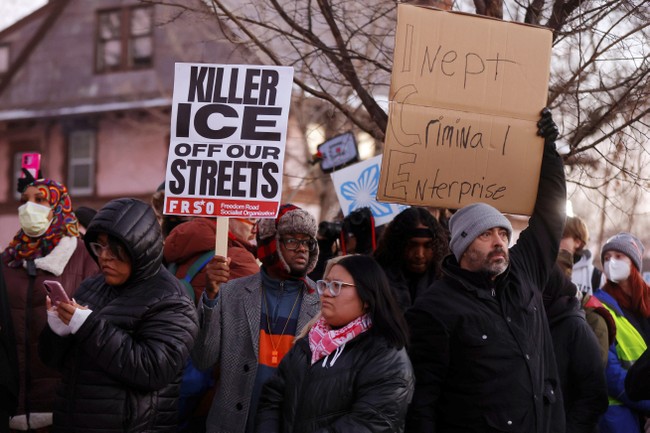
The rise in assaults on immigration officers has become a national concern, with recent Department of Homeland Security figures reporting dramatic increases in assaults, vehicular attacks, and death threats against ICE and Border Patrol personnel; this article lays out the facts, quotes official DHS statements, and argues the enforcement gap at the border is a central driver of the violence being reported.
Working in law enforcement is inherently risky, and federal immigration officers face unique dangers as they carry out their duties. These men and women are charged with enforcing immigration laws that Congress passed, often in chaotic and confrontational settings. Recent events show that those confrontations are escalating into more violent encounters than we’ve seen in recent memory.
The Department of Homeland Security has provided stark statistics that underscore the trend and the stakes. Those numbers are not hearsay or opinion; they come from DHS reporting that details sharp year-over-year increases in attacks directed at immigration officers. The rise is alarming and demands attention from policymakers and the public alike.
Assaults against U.S. Immigration and Customs Enforcement officers are up 1,300%, vehicular attacks are up 3,200% and death threats are up 8,000%, the Department of Homeland Security said after a U.S. citizen was shot and killed during an alleged vehicular attack in Minneapolis this week.
Federal authorities argue the shooting was justified and in self-defense. Local and state officials say otherwise.
Those DHS figures come amid specific, violent incidents that illustrate the pattern. One high-profile case involved a deadly episode in Minneapolis framed as an alleged vehicular attack that prompted national attention and divergent local and federal statements. That collision of narratives highlights how politically charged these encounters have become.
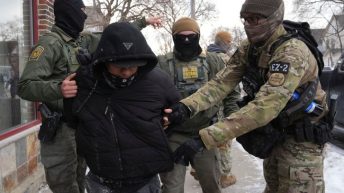
One day after the Minneapolis shooting, two Venezuelan nationals were shot by a Border Patrol agent after they attempted to run him over with their vehicle in Portland, Ore., the Department of Homeland Security said.
The two Venezuelans and alleged Tren de Aragua members “weaponized their vehicle against Border Patrol in Portland. The agent took immediate action to defend himself and others, shooting them,” DHS said.
The Portland incident, as described by DHS, involved individuals identified as members of an organized criminal group allegedly using a vehicle as a weapon against a Border Patrol agent. DHS characterized the agent’s response as immediate and defensive. When officers are forced into split-second life-or-death decisions, the legal and moral debates that follow can be intense and prolonged.
Beyond isolated events, DHS reporting shows a dramatic increase in vehicular attacks and other assaults against both ICE and Border Patrol officers nationwide. The trend accelerated alongside surges in migrant flows and stretches in enforcement capacity. When the rule of law at the border is unevenly applied, enforcement officers are left exposed and communities suffer the consequences.
Critics of current policy point to non-enforcement and weak immigration controls as part of the causal chain that allows dangerous actors to exploit gaps. From this perspective, the spike in attacks is not just about protests or isolated bad actors; it is a symptom of a broader breakdown in border security and immigration enforcement. That argument insists policymakers must restore lawful, consistent enforcement to protect officers and the public.
There is also a public-safety argument that goes beyond politics: when agents are assaulted, threatened, or targeted with vehicles, the entire enforcement system is compromised. Departments must be able to operate without fearing politicized interference or organized assaults. That means clear directives, resources, and support for those on the front lines who are enforcing the laws lawmakers pass.
As these incidents proliferate, the legal cases and public debates will follow, and courts will sort out claims of justified force versus allegations of misconduct. Meanwhile, border and immigration officials continue daily operations under increasingly hazardous conditions. Those realities should shape legislative priorities and public discussion as Congress and the administration consider how to restore order, protect officers, and secure the border.


Add comment