
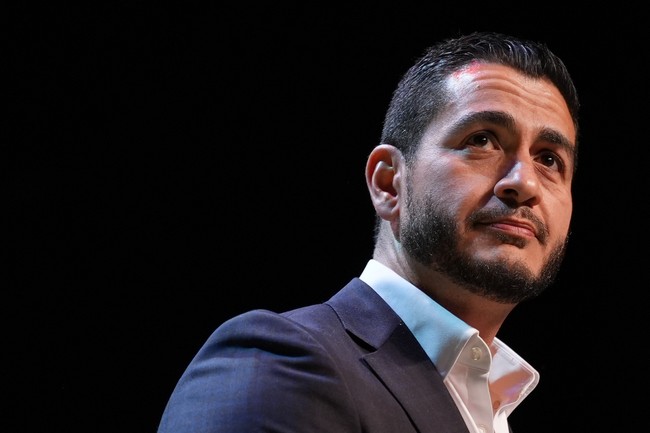
The Michigan Senate contest has turned into a culture fight after resurfaced remarks from Abdul El-Sayed and reported ties to controversial groups; this article examines his 2018 line about Muslims and Americans, his stance on a sharia ban, reactions from Republicans, and the broader political implications for voters and cultural cohesion.
Whenever a Muslim Democrat runs, the charge of “Islamophobia” gets thrown around as a cudgel to silence critics and label concern as prejudice. That label frames opposition as bigotry rather than a debate about values, security, or assimilation. From a Republican perspective, calling everything criticism “phobia” shuts down necessary scrutiny.
Rarely do we hear the mirror claim: that some Muslim leaders or activists harbor hostility toward mainstream American culture. The resurfaced footage of Abdul El-Sayed saying, “You may not hate Muslims, but Muslims for sure hate you,” reopened that conversation and forced voters to confront uncomfortable questions. Political leaders should be held accountable for language that divides rather than unites.
El-Sayed has also weighed in against a sharia ban, speaking at an Oklahoma Council of Islamic-American Relations event in 2022 and reflecting on history in a way that tied the sharia referendum to broader American tragedies. The speech aimed to place legal bans in a historical context, but many voters see it as dodging practical concerns about foreign legal systems influencing American law. That gap between rhetoric and voter concerns is what opponents are seizing on.
The transcript includes lengthy reflections that trace modern debates back to the Trail of Tears and the Tulsa massacre. In his words: “Now, I had planned to keep that to be the history that I would cover as we talk about our future. But I was reminded actually about events that I remember because I was an adult when they happened. And that was question 755 when the state of Oklahoma voted in a referendum to amend the constitution to ban Sharia law.”
El-Sayed continued: “What does that mean? I don’t know. And yet the voters banned it anyway. What I offer today is just a reflection on the American history that runs through this state.” He tied the sharia debate to “the same exact forces that drove native peoples from their land two centuries ago, destroyed Black Wall Street a century ago, bombed a building decades ago, and tried to ban Sharia not a decade ago, that those forces are alive and well today.”
“You all sitting in this room in this town. We’re sitting in a space in a time when I don’t have to tell you that the same exact forces that drove native peoples from their land two centuries ago, destroyed Black Wall Street a century ago, bombed a building decades ago, and tried to ban Sharia not a decade ago, that those forces are alive and well today.”
https://x.com/Milajoy/status/2086218921515110552
“And the reason I wanted to go all the way back to the 1830s is because you can’t understand a Sharia ban without understanding the Trail of Tears. You can’t understand the efforts to uproot Muslim Americans without understanding the Tulsa massacre.You cannot understand the challenges we face today without understanding white supremacy.”
Republican critics wasted no time. Representative Nancy Mace called out what she called explicit advocacy of sharia in the United States and urged voters to act. That kind of rhetoric from a Democrat candidate alarms conservatives who see it as a sign the party is moving away from guardrails that protect American institutions.
Further scrutiny has focused on El-Sayed’s donor list and associations, which include several prominent figures tied to Muslim advocacy organizations. Counter-terrorism experts and watchdogs have drawn attention to links between some donors and groups that have faced longstanding allegations of problematic ties abroad. Even if no illegal activity is alleged, the optics matter in a close statewide race.
Political opponents point to fundraising relationships and public statements as proof the Democratic nominee embodies a broader strategy: reshaping demographics and cultural norms to cement partisan advantage. They argue the party is increasingly relying on identity-based appeals rather than a message that unites working-class Americans of all backgrounds.
Outside commentators have also flagged the candidate’s refusal to distance himself from extreme figures and online personalities who traffic in divisive, racially charged commentary. Those associations feed a narrative that some voices within the party prefer culture clash over cultural cohesion. Voters who prioritize national unity and shared civic values see this as deeply troubling.
From a conservative viewpoint, the stakes are not just about one race but about which values will guide policy and public life. When language suggests that entire groups hold contempt for Americans, or when candidates downplay legal and cultural integration concerns, the result is less trust and more polarization. That’s the environment Republicans say they’re running against heading into November.
Democratic voters may shrug and move on, but for many Americans this is a clear red flag: candidates who employ divisive framing or who have opaque ties to controversial organizations deserve careful scrutiny. The coming months will determine whether those concerns sway enough voters to change the course of a competitive Senate race.
Add comment