
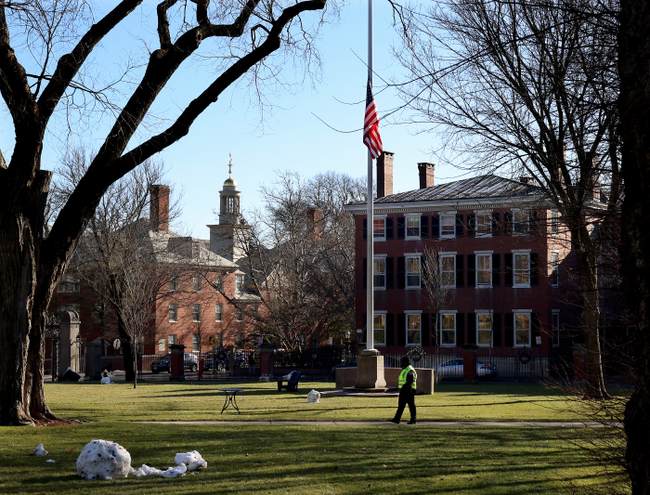
This piece examines Brown University’s security breakdowns after the recent shootings, argues that leadership failures—especially at the top of campus public safety—created conditions that allowed the killer to act, and raises questions about priorities, communication, staffing, and accountability in the aftermath.
The press conference after the arrests felt tone-deaf: officials took a victory lap instead of owning glaring failures. A homeless man and a Reddit post played decisive roles in identifying the suspect, which highlights how outside actors, not university systems, solved the mystery. That should make anyone in charge of campus safety uneasy.
The shooter killed Ella Cook, Mukhammad Aziz Umurzokov, and MIT professor Nuno Loureiro before taking his own life, and the sequence of events points to systemic breakdowns. Response times, perimeter control, and building access all appear to have been flawed, offering the attacker opportunities he should not have had. When lapses stack up, tragic outcomes become predictable.
Vice President of Public Safety and Management Rodney Chatman stands at the center of the criticism, with multiple votes of no confidence coming from campus police unions this year. Those unions cited leadership decisions that prioritized administrative roles over boots-on-the-ground officers, which they say weakened field operations and morale. If true, that shift helps explain why surveillance, communications, and staffing failed in a crisis.
The Brown University Security Patrolperson’s Association issued a vote of no confidence in Brown University Police Chief Rodney Chatman and Deputy Chief John Vinson, the union announced in a Wednesday press release. This follows an Aug. 27 unanimous vote of no confidence by the Brown University Police Sergeants Union announced last month, The Herald previously reported.
The vote, finalized Oct. 17, “reflects deep concern among the membership regarding the direction and leadership of the Department of Public Safety,” the statement reads.
Union warnings referenced shrinking field ranks, tech failures, and a climate of fear and potential retaliation inside the department. Those are not abstract HR problems; they translate to fewer officers available, unreliable equipment in active incidents, and people afraid to speak up about vulnerabilities. In a campus environment, those failures endanger real lives.
According to the statement, the current DPS administration has prioritized establishing new administrative positions while decreasing the number of officers assigned to field operations. This change, the union says, has “directly contributed to an all-time low in morale and has strained the department’s ability to effectively serve the Brown University community.”
Another union statement noted technology failures and low morale that have caused high turnover and burnout. That explains why some officers reported missing camera footage and why critical systems were not performing when needed. When leadership emphasizes optics and programs over operational readiness, surveillance and communication gaps can follow.
The statement also cites a “climate of fear and possibility of retaliation” in the department, while also noting that many officers have technology failures in the field. Largely left unresolved, these challenges “have led to high turnover and burnout among officers,” the release reads.
The Barus and Holley Engineering building was allegedly supposed to be keycard access-only, yet the shooter entered and attacked a study group. Reports also emerged that the person who helped finger the suspect was living in the building’s basement. Those facts point to lax access control and poor oversight of student and building safety protocols.
Dispatch logs and recordings show that Providence police entered the building more than 10 minutes after the first active-shooter call, by which point the attacker had already fled. A delayed campus lockdown and an early public announcement naming a person of interest appear to have hampered containment efforts and may have allowed the assailant to slip away before authorities could close the perimeter.
Chatman’s public-facing materials and social media messaging emphasize community engagement and compassion, which are fine goals until an emergency demands decisive, forceful action. One internal post urged that images of officers in tactical gear be removed from promotional materials to alleviate community anxiety, a posture that critics now say underscored an emphasis on perception over preparedness.
It is a privilege to serve in the capacity of executive director of public safety and chief of police. I have always said that you can’t effectively police a community unless you are a part of that community. This philosophy describes the manner in which we deliver policing services. We police with compassion and integrity while valuing the authentic relationships we build with community members.
Specialties: My specialties include public speaking, crisis communication and community oriented policing
Notifications to students and staff came notably late, with some learning of the active shooter through third-party apps. That delayed crisis communication undermined trust and left many people unaware of imminent danger. Effective emergency alerts and reliable campus channels are nonnegotiable in active threats.
Brown DPS hosts listening sessions, where students can bring their concerns to authorities, according to a webpage on the school’s site.
“Within the listening session format, students are encouraged to attend to share thoughts and recommendations into matters that have the potential to impact police-community relations and campus safety programming on Brown’s campus,” the page said, adding that there are “many issues that are deeply concerning to us all.
“Students will also have the opportunity to learn about the department’s Diversity and Inclusion Action Plan (DIAP) and to provide feedback,” the page says.
In 2016, the campus security department launched its Diversity & Inclusion Action Plan (DIAP), focused on diversity within the campus safety department. Those efforts continue today.
The institution’s resources and tuition revenue raise reasonable questions about whether operational safety gets its fair share of funding and attention. Robust, well-staffed patrols, working cameras, and quick, clear alerts cost money and leadership focus, and those investments matter when lives are at risk. The community deserves answers about priorities and corrective steps to prevent a repeat.

Add comment