
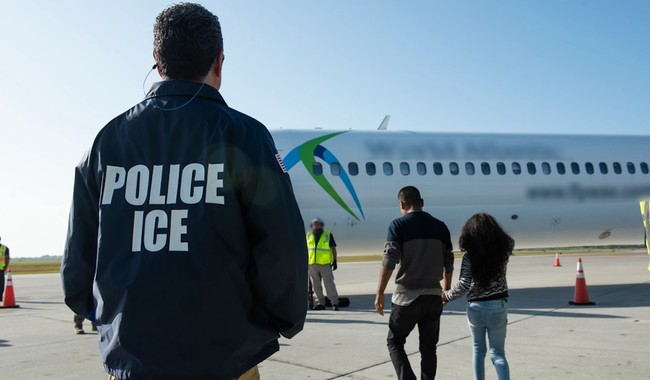
Aelo Airlines announced in January that it would stop handling deportation charters out of Mesa Gateway Airport, a move that the company says is driven by business realities rather than protests, while activists claim victory. This piece examines the corporate explanation, the subcontracting role of CSI Aviation and the Department of Homeland Security, the operational changes Avelo is making, and how activists and the press framed the story.
News surfaced early in January that Avelo Airlines had suspended the arrangement to handle flights for Immigration and Customs Enforcement from Mesa Gateway Airport in Arizona. The announcement prompted immediate coverage and celebration in parts of the media that framed the decision as a direct response to public pressure.
Some outlets leaned into the narrative that protests and boycotts forced the carrier’s hand, quoting activists and emphasizing the timing of the decision relative to demonstrations. One quoted passage read, “Since publicizing its new business arrangement in April, the low-fare carrier faced protests, boycotts, and backlash from travelers, flight attendant unions, local politicians and immigration activists.” That wording circulated widely as evidence the campaign achieved its goal.
Digging into how the operation worked clarifies that Avelo was not a primary government partner but a subcontracted carrier performing flights arranged by another company. The Department of Homeland Security had an agreement with CSI Aviation to organize charter flights, and CSI engaged a number of airlines, Avelo among them, to operate specific routes and schedules on that contract.
Company statements point to a different story about why the contract ended. In internal communication the CEO explained: “The program provided short-term benefits but ultimately did not deliver enough consistent and predictable revenue to overcome its operational complexity and costs.” That language frames the move as a financial and operational decision rather than a capitulation to public pressure.
Alongside ending the charter agreement, Avelo is restructuring parts of its route map and operations. The carrier announced it will wind down its Mesa base, curtail certain commercial routes, close some operating locations, and return several Boeing jets as it reshapes its network. The airline also said it has secured additional funding, which it described as strengthening its financial position for future growth, including an expansion into the Dallas market later in the year.
Company spokespeople told employees and the public that commercial travel numbers remained strong in 2025, with the carrier posting record passenger totals and double-digit growth on its scheduled flights. The messaging emphasized that the charter work did not fit the company’s long-term strategy because it added complexity without steady revenue, making divestment a rational business choice.
Protest groups rejected the corporate explanation and celebrated the public pressure as decisive. One activist statement declared, “After months of plummeting sales and canceled commercial flights, Avelo was forced to walk away from contracts that harmed immigrant families and destabilized workers — and it’s sales,” attributing the change directly to grassroots action and boycott efforts.
Those reactions illustrate how differently stakeholders interpret the same set of facts: executives cite balance sheets and operational headaches; activists see tactical wins and moral victories; reporters often amplify whichever framing aligns with their audience. The subcontractor model further complicates attribution, since the direct contractual partner with DHS was CSI Aviation, not the operating carrier itself.
The dispute over motive may matter less to the company’s immediate future than the broader trends shaping regional carriers: thin margins on niche routes, rising operational costs, and the need for predictable revenue streams. For a small airline focused on connecting underserved city pairs, occasional government charters add scheduling stress and logistical burdens that can undermine fleet utilization and crew planning.
Moving forward, Avelo’s choices will be watched by investors, competitors, and communities that rely on its service. The carrier’s stated plan to consolidate certain operations and invest in growth markets signals a preference for scalability and predictable demand, rather than ad hoc charter revenue. Whether activists view this as a victory or as a business reality, the outcome will influence how similar campaigns and corporate responses play out in the future.



Add comment