

The economy shows mixed signals: a smaller August trade deficit offers real hope while officials warn of pressure on prices from supply shocks and policy moves like tariff rebates. This piece walks through the latest trade numbers, comments from Rick Santelli and Treasury Secretary Scott Bessent, the forces pushing beef prices higher, and the political stakes around proposed $2,000 tariff rebates.
CNBC’s Rick Santelli flagged a notable shift in the trade picture when the delayed August data finally arrived, and that shift matters to anyone paying attention to the U.S. balance of payments. The trade deficit for August registered at minus $59.6 billion, which Santelli described as “the smallest deficit of the year” and a new low mark to watch. That improvement is real compared with July’s figures north of $70 billion, though it’s too early to declare a trend set in stone. Still, these numbers suggest trade policies and market dynamics are nudging the deficit in the right direction.
Mr. Santelli said:
Trade balance for August, as Andrew pointed out, very many weeks late, comes in at minus $59.6 billion, which means that the balance is a deficit. It’s very close to what we were expecting. But when you consider that minus 59 is kind of the new mark to pay attention to, that is the low line of the year. It’s the smallest deficit of the year.
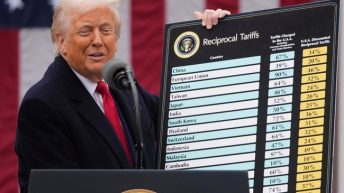
The smaller deficit gives Republicans an argument to make: trade moves and tariff leverage appear to be doing what they promised, shrinking the gap and bringing manufacturing and imports into a healthier balance. That does not mean all problems are solved; global demand, currency swings, and supply chains still matter. But a shrinking deficit is a concrete data point Republicans can point to when arguing that assertive trade policy benefits American workers and producers.
Treasury Secretary Scott Bessent used a high-profile Sunday appearance to frame the economic outlook and to preview the administration’s thinking on rebates funded by tariff revenue. His tone mixed caution and optimism, warning that conditions could produce a spike in prices even while the broader inflation trajectory is being managed. Bessent called the current situation “the perfect storm” for inflationary pressure, a blunt admission that policy wins can be fragile without attention to supply-side shocks.
During an exclusive interview on “Sunday Morning Futures” with FOX Business’ Maria Bartiromo, Bessent warned that the “perfect storm” is brewing for inflation while spotlighting federal responses.
“This is the perfect storm,” Bessent responded to a question about the possibility of $10-per-pound beef next year. “We inherited this terrible inflation. We are flattening it out. I believe we’re going to push it down, and energy prices are down, interest rates are down. But the real thing that is going to happen [is] that [this] is going to give Americans real purchasing power increases. It’s going to be through growth.”
Beef prices are not just a talking point; they reflect tangible supply shocks that can push headline inflation higher fast. Imports of Mexican beef have been halted over a screwworm infestation, and drought in grazing regions is forcing ranchers to shrink herds. Those supply constraints mean fewer cattle and higher per-pound prices, factors that neither central bankers nor politicians can instantly reverse.
The rebate idea is politically potent but practically tricky. The plan to use tariff revenue to cut $2,000 checks to low- and middle-income Americans reads well to voters worried about family budgets, but it requires legislation and fine print that has not yet been released. Republicans will have to weigh the political upside of delivering direct relief against concerns from fiscal conservatives who worry about long-term debt and precedent.
With inflationary pressures still at play across the country, the Trump administration announced last week it plans to use tariff revenue to issue $2,000 payments to low- and middle-income Americans, with any remaining funds directed toward reducing the nation’s massive debt.
“We need legislation for that,” Bessent said of the potential checks. “Thanks to him keeping his campaign promises to working Americans … the working class … [no] tax on tips, Social Security overtime, we are going to see a big bump there in the first quarter with the refunds and the real incomes … Sending $2,000 refunds … that would be for working families. We’ll have an income limit.”
Expect pushback from different corners. Debt hawks will challenge any plan that looks like short-term political gain at the expense of fiscal stability, while populist voters will demand checks and immediate relief. Republicans who control messaging need to connect the dots: if tariff revenue can be used to expand real purchasing power without bloating recurring spending, that has a plausible conservative defense.
Economics resists neat predictions; markets and weather both have a say in prices and growth. Still, the recent trade improvement and the administration’s policy ideas together offer a narrative Republicans can sell: targeted, growth-oriented measures combined with pressure on bad trade dynamics can help lower deficits and lift incomes. The task now is translating those numbers and proposals into policies that actually reduce costs for working families while keeping an eye on fiscal responsibility.


Add comment