
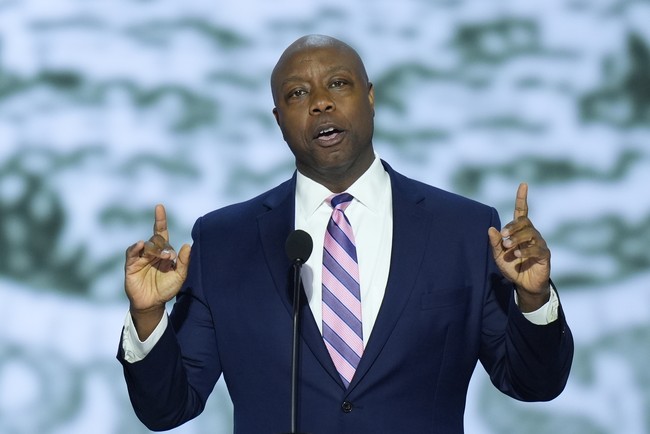
NBC’s Kristen Welker challenged Sen. Tim Scott about Republican ads accusing Michigan Democrat nominee Abdul El‑Sayed of “terrorist ties,” insisting no evidence links El‑Sayed to terrorism and questioning whether Republicans were trying to scare voters because he is Muslim. Scott rejected that framing, focused on El‑Sayed’s policy positions and associations, and pressed the argument that the company a candidate keeps matters to voters. The interview highlighted tensions over campaign messaging, media scrutiny, and how reporters handle questions about religion and national security. This piece reports the exchange and the surrounding facts from the Republican perspective.
On Meet the Press, Kristen Welker pressed Sen. Tim Scott to stop NRSC ads that claim Abdul El‑Sayed has “terrorist ties,” asserting twice that there is no evidence he supports terrorism and asking if Republicans were trying to frighten voters because El‑Sayed is Muslim. Scott, who chairs the National Republican Senatorial Committee, dismissed that premise and steered the conversation back to El‑Sayed’s policy positions and public associations. He argued the campaign’s focus is on El‑Sayed’s agenda and the people who appear with him, not on faith. That distinction framed the rest of the exchange.
Welker pushed the question again, pointing to media analysis that flagged frequent references to Islam in right‑leaning commentary about El‑Sayed. Scott answered plainly that Republicans were not trying to scare voters based on religion. He emphasized instead that voters should weigh El‑Sayed’s own words, proposals, and the company he keeps. The senator repeatedly linked those concerns to El‑Sayed’s record and campaign activity.
Scott pointed to specific policy stances he says demonstrate El‑Sayed is out of step with Michigan voters, including positions on immigration enforcement and policing. He also raised El‑Sayed’s campaign appearances with left‑wing streamer Hasan Piker, noting that association matters when judging a candidate. Scott argued that actions speak louder than denouncements of extreme comments, even when those denouncements occur. That was his rationale for defending the NRSC ads and continuing the line of attack.
Welker asked, “Are Republicans trying to scare voters based on the fact that El‑Sayed would be the first Muslim senator?” Scott replied, “Not at all.” He continued by highlighting what he describes as El‑Sayed’s positions on Sharia law and proposals to dismantle parts of the national security apparatus. Scott reiterated that El‑Sayed’s public alliances and campaign appearances are fair game for voters and for political scrutiny. That remained the central claim from the Republican side.
During the exchange Scott raised additional material connected to El‑Sayed’s background, including reporting about books on his living room bookshelf and claims about a family member’s past activities. The reporting cited works tied to an unindicted co‑conspirator in the 1993 World Trade Center bombing and writings that have influenced al‑Qaeda, items reportedly visible in El‑Sayed’s home. Scott also referenced reporting that identified a family member as having helped resource Osama bin Laden. Those details were presented to argue that associations and influences deserve attention in a high‑stakes Senate race.
Welker pressed Scott to limit his criticism to El‑Sayed’s own statements and to drop the broader allegations tied to family or secondary associations. Scott countered that voters evaluate a candidate on a range of factors, including who they meet with and endorse. He insisted that denouncements must be matched by consistent action, saying, “You can’t denounce it with your words and do something different with your actions. We believe what you do, not just what you say.” That line underscored the Republican argument that campaign behavior matters.
The NRSC ads remained in circulation after the interview, and Scott used his airtime to reiterate the case against El‑Sayed rather than retract his party’s messaging. Republican strategists argue that highlighting a nominee’s associations and policy agenda is a necessary part of informing voters, particularly on national security and public safety. The exchange exposed a broader media tension over how networks frame questions about religion, ideology, and political attack ads.
From the Republican viewpoint, the discussion was less about religion and more about the substance of El‑Sayed’s positions and the people he chooses to align with on the campaign trail. Scott framed his defense of the ads as a defense of voter information and accountability, insisting the NRSC has a duty to raise relevant points about a major party nominee. That rationale drove the senator’s refusal to back down when pressed on neutral ground.
Ultimately, the segment showed the clash between a journalist pushing a narrative about religiously motivated attacks and a Republican leader pushing back with policy and association‑based critiques. The debate highlighted how campaign messaging and media framing intersect in competitive Senate races, and how Republicans plan to keep spotlighting what they view as risky positions and associations from their opponents.
https://x.com/BonillaJL/status/2091563093847314753


Home-based job that pays more than 12,000 Dollar per month by doing simple tasks on a laptop or mobile device part-time. Last month, I earned 24,863 Dollar from this job by working 4 hours per day online. Very simple jobs to do, and the earnings are insane. Everyone can now make more money online by joining the website listed below…..
𝒋𝒖𝒔𝒕 𝒖𝒔𝒊𝒏𝒈 𝒕𝒉𝒊𝒔 𝒔𝒊𝒕𝒆.. Www.PayAtHome1.Com