
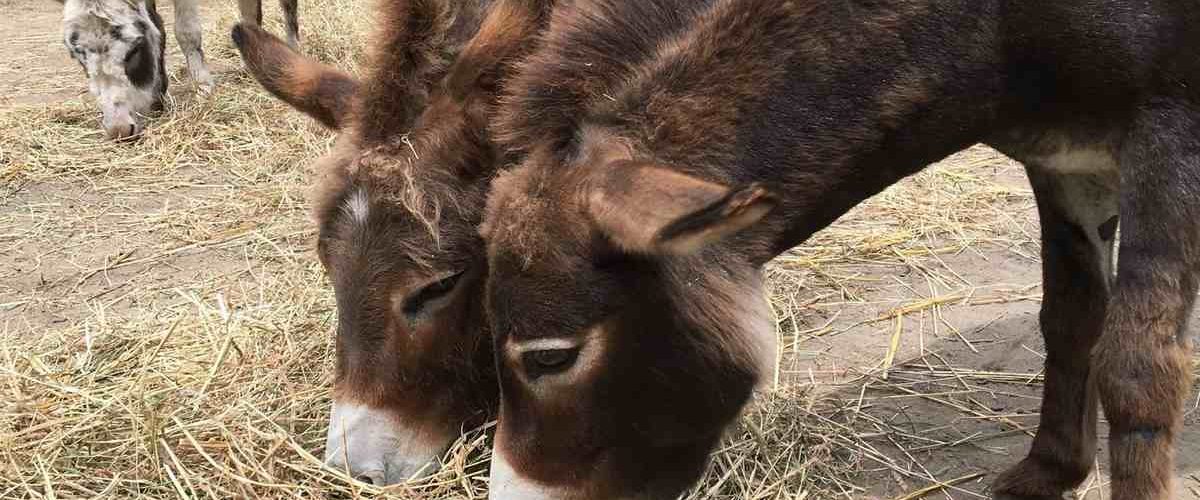
A Georgia family is grieving after a 1-year-old miniature donkey named HeeHaw was shot and killed by a police officer who entered their pasture during an overnight search for a missing child. The owner says officers came onto the property without permission and that the donkey was familiar with people, having been bottle-raised and used in petting settings. Local authorities confirmed an officer fired the fatal shot and has been placed on paid administrative leave while the state investigates. The episode has reignited debate over how law enforcement handles encounters with animals on private property during searches.
The incident occurred around 12:45 AM when officers searched the Cedartown property while looking for a missing 12-year-old girl. HeeHaw’s owner reports that officers entered without warning or permission and later told her the donkey ran toward them while braying. According to the owner’s account, officers attempted to tase HeeHaw before one of them shot him. The family stresses that HeeHaw was not feral; he was raised in the house and was used to being handled by people.
The owner angrily wrote: “They claimed he ran up to them braying and they thought they were in danger and shot and killed him after trying to taze him. HeeHaw was raised in the house and did petting zoos he never knew a stranger. And was shot and killed in his OWN pasture for doing what donkeys do. Alerting to a stranger.” Those words capture both hurt and bewilderment about a simple animal response being treated as a deadly threat. The quote has become central to conversations about proportional response when officers confront animals during operations.
Cedartown Police Chief Jamie Newsome confirmed an officer shot HeeHaw and said the officer is on paid administrative leave while the Georgia Department of Agriculture’s Law Enforcement Division investigates. Newsome has viewed body-camera footage but has not released details or explained what the footage shows, and he acknowledged he did not ask the officer directly why he fired. That lack of public clarity has added fuel to local outrage and calls for more transparency about the decision to use lethal force against an animal on private property.
This case is being compared to other recent incidents where police encounters with pets ended badly. Weeks earlier in Texas, deputies serving what they called a high-risk felony warrant went to the wrong address, and a homeowner’s dog was shot when it came outside. Investigators later admitted the warrant subject no longer lived at that address, but the dog had already been killed. Those events highlight recurring questions about accuracy, tactics, and consequences when law enforcement operations intersect with private homes and animals.
https://x.com/Justice4HeeHaw/status/2094443337415610544
In another recent example, Los Angeles officers shot a family dog multiple times on bodycam, prompting a lawsuit. While the facts differ in each situation, a pattern emerges: officers enter private property during searches or enforcement actions, animals react to strangers, and the outcomes can be tragic. Families and advocates say better training, clearer protocols, and nonlethal options might prevent needless deaths when animals behave predictably in the presence of intruders.
The family of HeeHaw says they plan legal action and have begun raising funds for attorney fees, reportedly gathering a significant amount for their cause. Meanwhile, the investigation continues and crucial footage remains unreleased to the public. Without that video, community members and observers are left to weigh competing accounts and insist on accountability while authorities complete their review.
Questions about trespass and the Fourth Amendment arise when police enter private property without permission during a search, even in the context of seeking a missing child. Property owners and civil liberties advocates underscore that searches and entries still require legal justification and proper procedure. When an officer’s actions result in the death of a beloved animal, families seek not just answers but measures to prevent similar tragedies going forward.
For the owners, HeeHaw was part of the household and community, accustomed to human contact and friendly settings like petting zoos. They say the donkey never left his pasture and was simply responding to the presence of strangers. That detail shapes how the family and neighbors interpret what happened: an animal doing what animals do, met with a lethal reaction.
As the state investigation proceeds, calls for transparency and policy review are likely to grow louder. The officer involved remains on administrative leave, and officials have emphasized that the matter is being handled by an external law enforcement division. In the absence of released body-camera footage, public pressure will probably focus on ensuring a full accounting of the decisions that led to HeeHaw’s death.
Grief and anger are natural responses for families who lose a pet under these circumstances, and the broader conversation now includes how police training and response options can reduce harm. Whether through improved de-escalation tactics around animals, stricter entry protocols, or clearer requirements for nonlethal tools, communities are pushing for changes that might spare other families similar pain. HeeHaw never left his pasture. Police came to him.



Add comment