
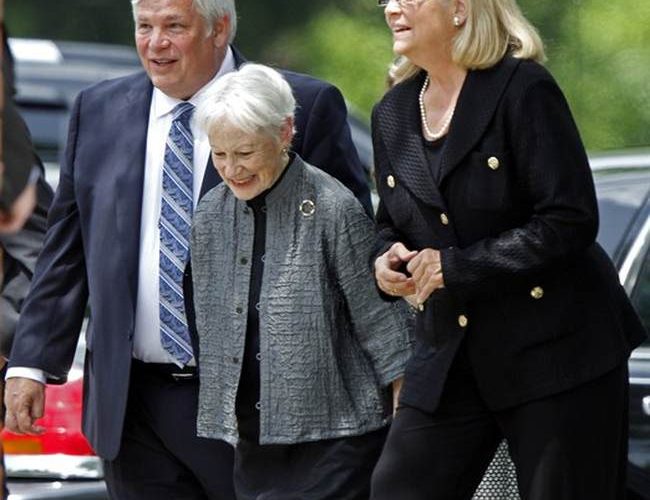
Nancy Kassebaum Baker was a steady, practical Republican from Kansas who served three Senate terms from 1979 to 1997 and died at 94; this piece recalls her legacy of conservative federalism, institutional steadiness, and policy-first leadership that produced results like the 1996 welfare reform law while resisting the urge to chase media spectacle.
Growing up in Kansas, her name felt as constant as the plains themselves. She arrived in Washington in 1978 as the first woman elected to the Senate without succeeding a husband or father in office, and she carried that milestone with quiet competence. Her pedigree included being the daughter of Alfred M. Landon, governor of Kansas from 1933 to 1937 and the 1936 Republican presidential nominee, but she never traded on family drama.
Kassebaum Baker served three full terms and kept her focus on reform rather than rhetoric. She preferred committees and votes over cable TV appearances, and she built a record rooted in outcomes instead of applause. Her approach was a working definition of conservative governance: limit the federal footprint and get measurable results for taxpayers.
As the first woman to chair a major Senate committee, she led Labor and Human Resources with an eye for practical change. She pushed work requirements, fiscal discipline, and a return of authority to states, all themes that culminated in the 1996 welfare reform law. Those policies reflected a belief that government should empower citizens, not create dependence.
https://x.com/foxnewspolitics/status/2091282593379742073
Her foreign policy instincts matched her domestic style: strong defense posture paired with pragmatic, measured engagement abroad. She believed in maintaining American strength while avoiding unnecessary overreach or adventurism. That balance made her a steady voice on national security without the partisan grandstanding so common today.
Her marriage to Howard Baker Jr., a former Senate majority leader from Tennessee, brought together two highly effective Republican figures, but she remained unmistakably her own politician. Kansans respected that she answered the mail, studied the legislation, and stayed out of theatrical politics. Durability, restraint, and a practical conservative ethic defined how she represented her home state.
The Senate culture she entered was more deliberative, and she navigated it without abandoning conservative principles. Her votes favored limited government, deregulation where appropriate, and policies that regarded workers and families as capable citizens rather than clients of the state. That record underlined a conservative truth: policy results matter more than viral moments.
In a time when public life often rewards noise, her career offers a contrasting playbook for the right. Real conservative power comes from legislative wins that rein in administrative overreach and reduce bureaucratic dependency. She treated public office as a duty to constituents, not a platform for perpetual campaigning.
She later served as co-chair of the Commission on Presidential Debates, a role congruent with her preference for institutions over spectacle. That work reflected her belief in maintaining the structures that allow democracy to function, even when the spotlight favors conflict. Her respect for institutions reinforced why steady leadership matters for conservative goals.
Nancy Kassebaum Baker’s passing closes a chapter on a generation of Republican senators who prioritized policy victories and personal accountability. Alongside figures like Bob Dole, she became synonymous with Kansas in the Senate, a label tied more to public service than partisan theater. The steadiness she embodied remains a model for conservatives who want substance over sound bites.
Her record is straightforward: consistent conservative discipline, practical reforms, and an insistence that federal power be checked by states and citizens. For Republicans seeking to translate ideas into lasting change, her career offers concrete examples of how to win policy while preserving institutional norms. That blend of principle and pragmatism is a legacy worth studying for anyone serious about conservative governance.



Add comment