
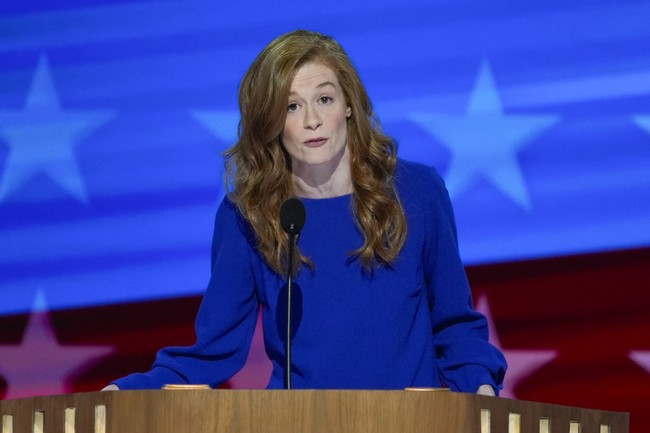
I will lay out why violent rhetoric from Democratic candidates matters, trace recent examples tied to high-profile figures and incidents, show how this escalates risk for opponents and institutions, examine the Michigan episode involving Rep. Haley Stevens and Sen. Mallory McMorrow, and explain why primary voters need to reject threats and endorse responsible discourse.
We’re seeing a dangerous trend: left-leaning public figures normalize anger that edges into threats, and Republican voters should treat this as a warning sign about who will hold power. A few years ago, a prominent Democratic leader publicly warned Supreme Court justices they “will pay the price,” and that kind of language didn’t vanish. In the years since, violent plots and attacks tied to partisan fury have surfaced, showing words can have consequences.
This pattern matters as we head into another election cycle, because rhetoric shapes behavior and signals what a party tolerates. Incidents from attacks on ICE and arson at private businesses to assassination attempts against national leaders show the stakes are real. Expecting political debate to stay civil while tolerating violent talk is naive; accountability must extend to candidates who flirt with threatening language.
Michigan is the latest test case. With Senator Gary Peters retiring, Democrats there are vetting replacements, and two names have drawn attention for different reasons. One is Rep. Haley Stevens, who is known for pushing impeachment articles against a federal official, part of a broader pattern of using aggressive tactics against ideological foes. The other is state Sen. Mallory McMorrow, whose remarks about public confrontations with Supreme Court justices prompted immediate alarm.
So I’m a Notre Dame grad, and Amy Coney Barrett coming out of my university makes me furious – just on a personal level. I talked to somebody yesterday who said they saw her with Brett Kavanaugh at a tailgate last weekend. I was like, I would not be able to control myself. That would be bad. There would be beers thrown in people’s faces.
That quote by McMorrow is on public record and should be read exactly as stated; it demonstrates a casual embrace of physical confrontation rather than persuasion. Suggesting someone would “not be able to control” themselves and that “beers” would be thrown crosses a line from strong disagreement into implied assault. From a Republican viewpoint, that is the sort of behavior that undercuts democratic norms and threatens peaceful exchange of ideas.
We should put these remarks in context: violent rhetoric doesn’t arise in a vacuum. When party leaders use incendiary phrases, it lowers the bar for lesser-known candidates and activists to follow suit. That’s why earlier remarks from a top Democratic senator about justices “paying the price” still matter; they set a permissive tone that can echo into local races and fuel dangerous copycat behavior.
Republicans aren’t calling for censorship; we’re calling for responsibility. Candidates who suggest throwing things or following people around in public are unfit to lead in a country where political disagreement is supposed to be resolved at the ballot box. Voters deserve to know whether a candidate will protect basic civil liberties, including the right to live and speak without fear of violent retribution.
There are real-world consequences when rhetoric escalates. The past few years have included attempted assassinations, attacks on public and private figures, and rioting tied to political causes. Any candidacy that announces a tolerance for harassment or physical intimidation invites instability. That’s why this issue belongs front and center in how we evaluate who should hold office.
Primary voters, especially in Democratic primaries, will decide whether this kind of rhetoric is rewarded or rejected, and Republicans should watch those outcomes closely. If a party’s nomination process elevates candidates who flirt with violence, it tells the country what that party is willing to tolerate. For conservatives, the immediate concern is practical: safe participation in civic life and the ability to campaign without fear.
Beyond immediate safety, there’s a larger institutional risk. Courts, law enforcement, and elected officials depend on a baseline of mutual respect to function. When that erodes, institutions become targets rather than neutral arbiters, giving rise to factional retaliation and weakened governance. Responsible discourse is not a nicety; it’s a stabilizing force that allows meaningful differences to be hashed out through institutions, not fists.
For now, Republicans should demand that all candidates — regardless of party — be held accountable for rhetoric that implies or encourages violence. It’s not about winning rhetorical battles; it’s about preserving the space where competing visions for the country can be pursued through votes, not threats. Voters must weigh temperament and respect for democratic norms as heavily as policy positions.


Add comment