
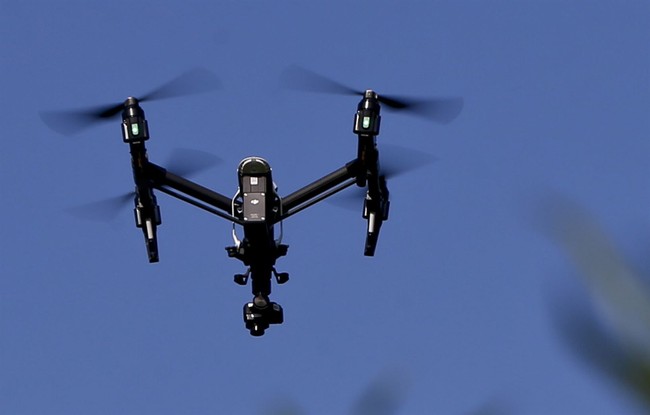
The World Cup wrapped up, but a disturbing incident in Kansas City highlights gaps in border security and enforcement: a repeatedly deported Mexican national flew a drone into restricted World Cup airspace, was arrested, and is now in ICE custody as deportation proceedings begin. This piece looks at law enforcement coordination at the tournament, the growing threat of weaponized drones, the suspect’s criminal history and immigration timeline, and what it suggests about border policy and public safety under current leadership.
The Department of Homeland Security, FBI, the FAA and local police coordinated tight airspace restrictions around World Cup venues, and their work prevented worse outcomes. Authorities seized hundreds of unauthorized drones and maintained a visible security perimeter above stadiums and fan areas to protect fans and sponsors. For conservatives, this shows that strong executive action and focused federal enforcement can make big events safer without new legislation.
The FBI, Department of Homeland Security and local police departments across the country worked together to enforce the Federal Aviation Administration’s temporary flight restrictions during the World Cup events that wrapped up Sunday, leading to the seizure of 700-plus unauthorized drones.
[…]
While the different law enforcement groups were operating in a “similar” way to day-to-day operations, there were, of course, differences. The FAA instituted temporary flight restrictions for a lengthy list of locations, including stadiums, fan-fest sites, team hotels, base camps and training facilities.
Drone weaponization is not hypothetical anymore; conflicts overseas have proven how easily unmanned aircraft can be turned into terror tools. That reality makes the FAA’s no-fly zones around major events sensible and necessary. When someone deliberately breaches those restrictions near a packed stadium, it isn’t just stupid — it’s a national security risk.
Kansas City — one of the host cities — handled fewer matches than Dallas but still faced serious problems like human trafficking and counterfeit goods. Local authorities did rescue children and investigate criminal networks during the event. Yet one arrest stood out: someone elected to fly a drone into restricted airspace near a match, risking lives and triggering federal attention.
Three guesses on what his immigration status was.
NEW: ICE identifies a man arrested by Kansas City police for flying a drone in a no fly zone during the FIFA World Cup as a previously deported Mexican illegal alien with a lengthy criminal history. ICE says they were notified Jose Garrido-Benitez is in the US illegally after his arrest for flying the drone near Arrowhead Stadium and they took custody of him and federal agents seized his drone.
https://x.com/BillMelugin_/status/2084294035997331851
ICE says Garrido-Benitez was arrested by law enforcement in Missouri and Kansas six times between 1999 and 2004 and was previously deported in 2003 but illegally re-entered, which is a felony.
He was convicted of felony forgery in 2004 and spent five years in a Missouri prison. He is now in ICE custody and in deportation proceedings.
The United States Department of Homeland Security (DHS) released the following statement after U.S. Immigration and Customs Enforcement (ICE) law enforcement arrested an illegal alien who was caught flying a drone in restricted airspace near a FIFA event in Kansas City, Missouri.
On July 3, Jose Gerardo Garrido-Benitez, a criminal illegal alien from Mexico, was flying a drone within 2.5 miles of Arrowhead Stadium, where World Cup festivities were taking place. Federal agents seized his drone and notified ICE, who arrested him on July 6. He remains in ICE custody pending removal.
Reports show this man has a long criminal record stretching back decades, including felony convictions and arrests for intoxication, forgery, battery and drug offenses. His pattern of arrest, deportation and re-entry is precisely the kind of case conservatives warn about when arguing for robust border enforcement. Repeat offenders who slip back across the border pose real risks to public safety and national events.
Garrido-Benitez has a criminal history that includes prior convictions for felony forgery and driving while intoxicated, and prior arrests for battery, possession of marijuana and drug paraphernalia, and possession of opiates, opium, or narcotic drugs.
“This criminal illegal alien dangerously flew a drone in restricted airspace near a FIFA event in Kansas City, Missouri,” said Assistant Secretary Lauren Bis. “His lengthy criminal history includes driving while intoxicated, forgery, battery, and possession of drugs. The Trump Administration will not allow illegal aliens to threaten the safety and security of the American people. We will continue to guarantee the safety of all who attend these historic games as the World Cup comes to an end.”
Notice the pattern of his most active years: the late 1990s and early 2000s. That timeline matters because it shows these cycles of crime and re-entry have been happening across administrations. Conservatives say the answer is consistent, tough enforcement at the border and aggressive removals of those who break the law, not vague promises or sanctuary policies that release offenders back onto local streets.
Kansas City has flirted with more lenient local policies despite being in a state that leans conservative, which complicates enforcement when criminals are released from custody. The fact that Garrido-Benitez was free in the community before ICE stepped in underscores the need for cooperative federal-state-local operations and a willingness to prioritize public safety. Strong federal leadership makes that possible, and this case is a reminder why the policy debate matters in real, concrete terms.
Ultimately, the incident reinforces a simple point for Republican readers: hard borders and decisive immigration enforcement protect American lives and events. When federal agencies coordinate and the executive acts, dangerous actors are removed, and the public is safer. That should be the standard moving forward, especially as drones and other asymmetric threats become more common at high-profile gatherings.
Add comment