
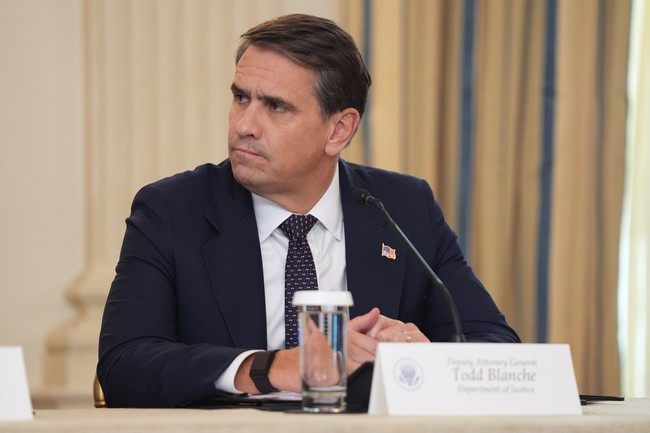
Deputy Attorney General Todd Blanche spent Sunday on TV defending recent Justice Department actions, highlighting major anti-trafficking work and addressing the arrest tied to Don Lemon and a church protest while calling out political double standards and lawlessness.
Todd Blanche showed up across the Sunday shows to lay out the department’s recent priorities and to push back against critics. He pointed to large releases in the Epstein files and emphasized ongoing investigations as part of a broader enforcement push. The tone was unapologetic: law enforcement has to act where crime occurs, regardless of optics or politics.
On CNN with Dana Bash, Blanche stressed results beyond high-profile documents, saying, “We have gone after more sex traffickers, more child pornographers, more men who have done harm to children and young women, than any Administration in history.” That claim framed the DOJ’s stance as aggressive and outcome-driven, aimed at rescuing victims and pursuing perpetrators. The exchange underscored how different media reactions can be depending on who sits in the Oval Office.
Blanche contrasted current enforcement with what he described as earlier failures tied to border policy and enforcement gaps. He pointed to efforts to locate missing children and dismantle trafficking networks as central achievements of his team. Law enforcement sources say those searches and rescues have involved coordination across multiple agencies and significant investigative work.
There was also a human element to the discussion: officials and whistleblowers cited how targeted action can change the fate of vulnerable kids and women. Prosecutors have been focusing on high-impact cases that reveal broader criminal patterns, while also trying to ensure investigations are thorough and legally sound. The message was that prosecutors are choosing cases that both protect victims and send a deterrent message.
Blanche criticized public figures and activists who, in his view, encourage protests that cross into lawbreaking and impede enforcement. He pointed to protests targeting ICE and other agencies as complicating the work of arresting predators and rescuing victims. That criticism tied political rhetoric to operational challenges on the ground, and it framed certain protests as enabling criminal actors rather than defending the vulnerable.
The conversation then shifted to the arrest linked to the Minnesota church incident and the arrest of former CNN host Don Lemon. That case pulled Blanche into a legal debate about warrants, probable cause and grand juries. While an appellate decision affected the warrant itself, Blanche highlighted the grand jury’s role in laying out the allegations and moving forward with indictments.
Blanche said, “Nobody in this country should feel comfortable storming into a church while it’s ongoing and disrupting that church service and thinking that we’re just going to stand by and let that happen.” He added, “It doesn’t matter if you happen to be a former CNN journalist,” Blanche explained. “You are not allowed to do that.” Those lines were used to make a point about equal enforcement and public order, stressing that status does not change the rules.
Legal analysts note the case raises classic questions about protest rights, criminal liability, and how courts treat warrants and indictments. One judge in the appellate panel wrote separately to stress probable cause in a concurring opinion, which complicates the public narrative. Prosecutors argue that a grand jury’s detailed indictment describes the conduct and grounds for charges even when other judicial rulings affect aspects of procedure.
Beyond the headlines, Blanche emphasized institutional priorities: pursuing traffickers, child exploiters and other predators while maintaining prosecutorial standards. He framed recent work as part of a sustained campaign to get dangerous people off the streets and to bring stability to communities. That framing was meant to reassure citizens who want assertive law enforcement without selective application.
The media exchanges also highlighted how partisan reactions shape the perception of justice work. Blanche chided commentators who treat the same actions differently depending on political allegiance, arguing that law enforcement must be consistent. His appearances were intended to shift the focus back to outcomes and victims rather than media narratives and political theater.


Add comment