

The 7th Circuit stepped in to curb a district court’s expansive order limiting federal immigration enforcement in Chicago, staying parts of the injunction and signaling that judges shouldn’t micromanage executive operations while still leaving room for narrower relief on constitutional claims.
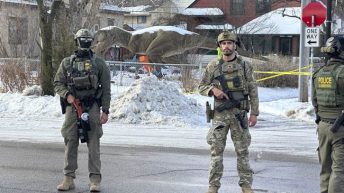
The case began when protesters gathered outside an ICE facility in Broadview, Illinois, prompting litigation over federal responses to demonstrations. A district judge in the Northern District of Illinois issued a temporary restraining order and later a modified preliminary injunction that the appellate court found sweeping and intrusive. The 7th Circuit granted a stay pending appeal and even issued a writ of mandamus to stop a particularly invasive requirement aimed at a CBP official. That move reflects a clear pushback against judicial overreach into executive functions.
The injunction targeted an unusually broad list of defendants, reaching as high as the President and entire federal departments, and effectively sought to enjoin all law enforcement officers within the Executive Branch. The appellate panel emphasized separation of powers concerns, noting that the district court demanded submission of internal guidance and policies for judicial review. Those demands blur the line between constitutional oversight and day-to-day management of law enforcement tactics.
Defendants are likely to succeed on the merits. The preliminary injunction entered by the district court is overbroad. In no uncertain terms, the district court’s order enjoins an expansive range of defendants, including the President of the United States, the entire Departments of Homeland Security and Justice, and anyone acting in concert with them. The practical effect is to enjoin all law enforcement officers within the Executive Branch. Further, the order requires the enjoined parties to submit for judicial review all current and future internal guidance, policies, and directives regarding efforts to implement the order—a mandate impermissibly infringing on principles of separation of powers on this record. Finally, the district court’s order is too prescriptive. For example, it enumerates and proscribes the use of scores of riot control weapons and other devices in a way that resembles a federal regulation.
The 7th Circuit also overturned a district-court demand that Chief Patrol Agent Gregory Bovino appear in court each weekday evening to report on use-of-force activities, calling that requirement an extreme example of judicial micromanagement. By granting mandamus for that aspect of the TRO, the appellate court signaled that courts cannot turn routine law enforcement reporting into a substitute for executive control. This is especially important when federal officers operate on the front lines of immigration enforcement and crowd management.
At the same time, the appellate opinion warned against reading the stay as a blanket denial of injunctive relief. The panel recognized the district court’s extensive factual record and said that, on a tighter and more targeted record, a narrower preliminary injunction might be appropriate to safeguard First and Fourth Amendment interests. That caution keeps the door open for tailored relief that respects both constitutional rights and the executive branch’s operational prerogatives.
Do not overread today’s order. Our concerns about the substantial overbreadth of the district court’s injunction lead us to stay it pending appeal, which we will expedite. But we have not concluded that preliminary relief is precluded. Acting on a very compressed timeline, the district court has developed voluminous and robust factual findings. Those findings may support entry of a more tailored and appropriate preliminary injunction that directly addresses the First and Fourth Amendment claims raised by these plaintiffs.
The court also flagged standing and justiciability issues, observing that changing enforcement patterns around the Broadview facility could affect whether plaintiffs have a live controversy. If enforcement activity has diminished or stopped, the case risks becoming moot or lacking the concrete disputes needed for federal courts to act. Those procedural questions add another layer of complexity that supports a careful, narrow approach rather than sweeping, one-size-fits-all decrees.
From a Republican perspective, the ruling is a welcome check on lower-court tendencies to substitute judicial management for executive decision making, especially in areas like immigration and law enforcement where the Constitution assigns primary responsibility to elected officials. The appellate court’s stance preserves needed flexibility for federal agencies to respond to protests, protect facilities, and enforce immigration laws while still honoring constitutional protections through proportionate judicial action.
The decision also underscores the practical risks of broad injunctions: they can tie the hands of officers on the ground, interfere with coordinated federal responses, and create confusion about lawful tactics and tools. Courts should constrain themselves to crafting remedies that vindicate individual rights without issuing sweeping directives that look like regulations in disguise. That balance is what the 7th Circuit sought to restore by staying the district court’s expansive order while leaving room for focused relief on valid constitutional claims.
Ultimately, the 7th Circuit’s move is a reminder that appellate oversight matters when district judges stray into operational mandates better handled by the executive branch. The court expedited the appeal and indicated judges can, and should, fashion precise remedies when justified by the facts and law. For now, the government retains room to manage enforcement in the Chicago area while the appellate process works through the scope and limits of appropriate judicial intervention.
Editor’s Note: Unelected federal judges are hijacking President Trump’s agenda and insulting the will of the people

Add comment