
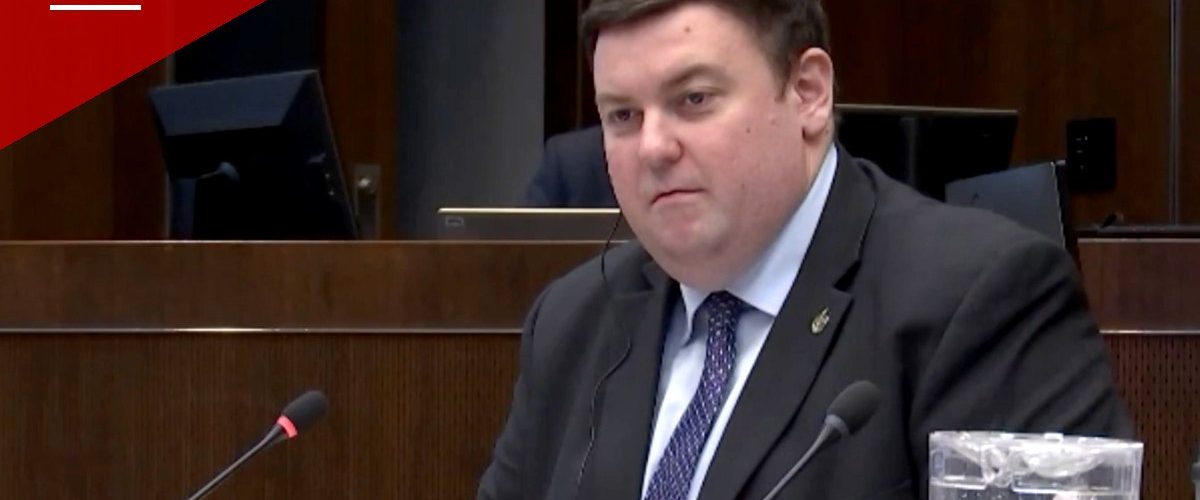
A Canadian physician who has carried out more than 100 euthanasia procedures told a parliamentary committee in Ottawa this week that he still supports extending the country’s medically assisted dying program to infants under one year old with severe, life-threatening conditions.
Dr. Alain Naud, a 69-year-old family physician and clinical professor, made the comments during a Nov. 23 session of a parliamentary committee, which was recorded and posted on X. Conservative MP Andrew Lawton, a longtime critic of Canada’s expanding assisted-dying regime, questioned Naud about a recommendation he made in 2022 to allow access to medical assistance in dying, known as MAID, for children aged zero to one.
“Do you still believe that the government should allow access to MAID for children zero to one year of age with severe, life-threatening conditions?” Lawton asked.
Naud smiled and laughed in response, prompting Lawton to push back sharply.
“Why are you laughing at that, sir? That is a question about whether MAID should be given to infants. Surely we can agree that doesn’t deserve a chuckle.”
Naud apologized for his reaction but stood by his position, clarifying that he meant “babies who were born with conditions incompatible with life . . . for example, a baby born without a brain.” He said he had heard from mothers in Quebec who wanted the ability to make that decision on behalf of their newborns.
“I’ve heard testimony from mothers in Quebec who went through such hard times and asked to be able to decide on behalf of their child because they did not, they couldn’t bear to see their baby like that anymore. So these are conditions incompatible with life.”
The committee also questioned Naud about administering lethal injections to patients who had previously consented to an assisted death through an advance directive but had since lost the mental capacity to understand what was happening. Lawton noted that some patients became agitated or combative at the moment of the injection. Naud acknowledged that in some cases a patient did not know why they were being injected, but said he believed proceeding was still the right course.
Naud had previously floated the idea of putting lethal medication into a glass of juice so patients would not resist or struggle during the procedure, according to the Euthanasia Prevention Coalition. He stressed during the hearing that he has never actually done this.
Canada legalized medical assistance in dying in June 2016, and the program has since expanded to cover a widening range of conditions and circumstances. In both Canada and New York, which legalized a more limited form of medically assisted dying effective Aug. 5, 2026, the minimum age to request euthanasia is 18. New York’s law differs from Canada’s in requiring patients to self-administer the life-ending medication rather than having a physician deliver a lethal injection.



Add comment