
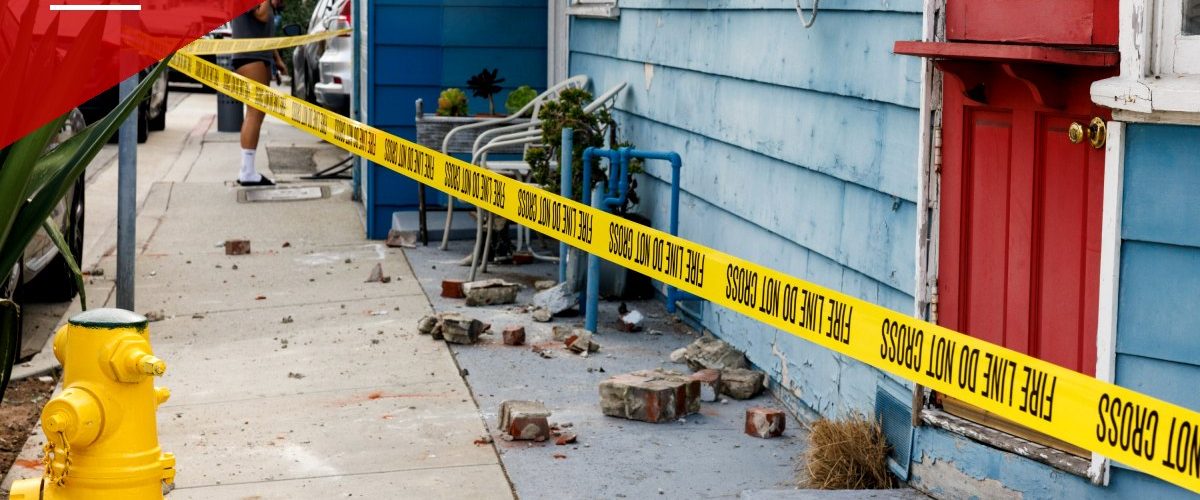
A magnitude 5.0 earthquake struck roughly four miles southwest of Manhattan Beach at 9:30 a.m. Saturday, setting off more than a dozen aftershocks felt across Los Angeles and into neighboring counties, including a strong magnitude 4.6 jolt at 11:41 a.m.
The shaking reached South LA, Santa Monica, Pasadena and Ventura County, according to the U.S. Geological Survey. Windows cracked at LAX and in homes along the coast, and the tremors were felt by millions of residents across the region.
U.S. Geological Survey seismologist Dr. Clara Yoon told the California Post that residents should expect continued aftershocks in the same offshore area over the coming hours and days, though activity should taper off if no larger quake follows.
“Southern California is earthquake country. We live on a major plate boundary between the Pacific and North American plates,” Yoon said. “There are many, many faults that are under the Los Angeles basin, and they are moving really slowly. So it’s not surprising that we occasionally have earthquakes.”
Yoon said the pattern typical of aftershock sequences means the immediate risk should decline the longer the region goes without a repeat event.
“I think we should expect smaller earthquakes, which are aftershocks, to happen soon after the earthquakes today, kind of in the same area,” she said. “But as more time goes on, as we go from hours to days to weeks and nothing happens, it’s more likely that earthquake activity will quiet down.”
Still, scientists cannot rule out something bigger. Yoon put the odds of a larger earthquake following Saturday’s cluster at about 5%, or one in 20.
Why the shaking felt so strong
Saturday’s initial quake struck at a depth of about 12 kilometers (roughly 7.6 miles), on the deeper end for California temblors. But Yoon said it was the quake’s proximity to a dense coastal population, not its size, that made the shaking feel so intense.
“These are moderate-sized earthquakes. They’re not very big, but they happened close to a large population,” she said. “So they were felt by millions of people, and if you live nearby, they can definitely be scary.”
“Just because it happened so close, just a couple of miles away from the shore, that’s what makes the shaking feel strong,” Yoon added. “If you live really close to where the earthquake happened, and then as you get farther away, the shaking is not going to be as strong. So it’s just a matter of where you are.”
What a bigger quake would mean
The earthquake magnitude scale is logarithmic, meaning each whole-number increase represents a massive jump in released energy. A magnitude 5.0 quake like Saturday’s was strong enough to knock items off shelves and crack glass near the South Bay and LAX, but not enough to cause widespread structural damage.
“A magnitude 5 is big enough to scare you, but it’s not really going to cause too much damage,” Yoon said. “A magnitude 5 only affects a small area, near the airport, near the beach cities in the South Bay.”
A magnitude 6.0 earthquake would release about 32 times more energy than Saturday’s quake. A magnitude 7.0 or higher would release roughly 1,000 times more energy, enough to cause catastrophic damage across the Los Angeles basin.
“If you talk about a magnitude 7-plus earthquake, that would release 1,000 times as much energy as a magnitude 5,” Yoon warned. “So it would be a disaster if something like that happened in Southern California.”
Scientists cannot predict when or if a major rupture will occur, but Yoon urged residents to treat the weekend’s swarm as a reminder to prepare on their own terms, rather than wait on government response.
“We live in an area with active faults and earthquakes are always a possibility in Southern California,” she said. “Make sure you know how to drop, cover, and hold on if you feel shaking. Make sure you’re signed up for earthquake early warning alerts, and maybe do one thing to check your emergency supplies, make sure you have enough water saved up in case of emergency, and just have a plan.”
Add comment