
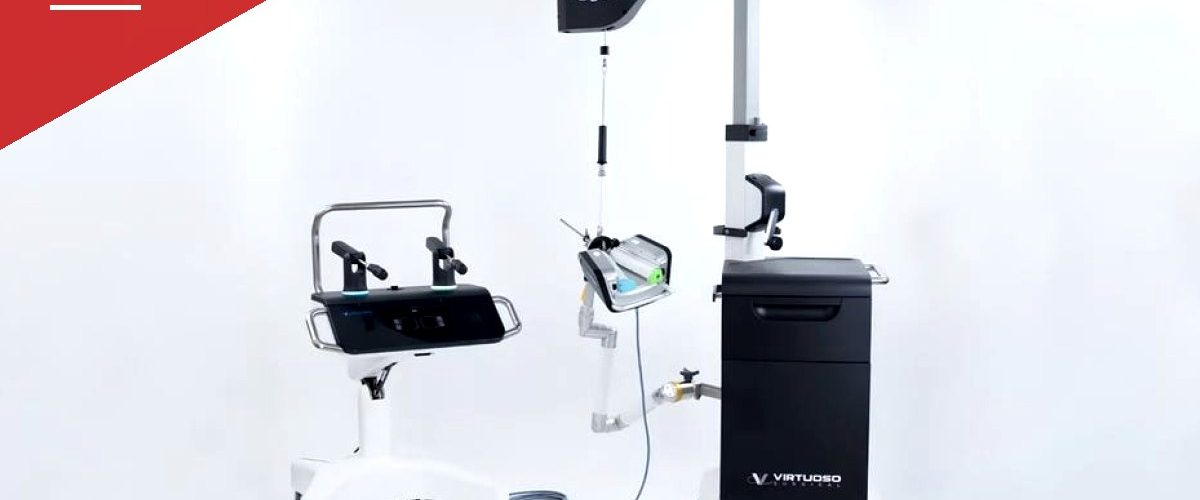
The Food and Drug Administration has granted De Novo authorization to the Virtuoso Endoscopy System, a miniature surgical robot developed by Nashville-based Virtuoso Surgical, clearing the way for its use in removing bladder tumors through the urethra without external incisions.
The FDA made the authorization on October 30, 2026, and Virtuoso announced the decision publicly on November 10. The clearance establishes a new FDA classification for robotic surgical instruments that operate through an endoscope inside the body. The system is authorized for removing bladder lesions in adult patients and obtaining tissue samples, including bladder muscle, to assist in diagnosing bladder cancer.
The device uses a rigid endoscope inserted through the urethra, tipped with two robotic arms made from a flexible metal alloy called nitinol. A surgeon controls both arms from a console: one arm lifts and holds the tumor while the other separates it from underlying tissue, giving a surgeon two-handed control inside a confined space. The system does not operate autonomously or make surgical decisions on its own.
The approach is known as en bloc resection, meaning a tumor is removed in one piece rather than in fragments. Surgeons already perform this technique with conventional instruments, but it is technically demanding. Virtuoso built its system to make it easier.
Why Intact Tissue Matters
Bladder cancer is expected to affect roughly 84,530 people in the United States in 2026, according to the American Cancer Society. The standard procedure for evaluating and removing bladder tumors, transurethral resection of bladder tumor (TURBT), often removes tumors in smaller pieces. That can make it harder for pathologists to determine how deeply a cancer has grown, particularly whether it has reached the bladder’s detrusor muscle — information that can change a patient’s recommended treatment.
Dr. Duke Herrell, a urologic surgeon and CEO of Virtuoso Surgical, said in the company’s FDA announcement that removing a tumor intact can provide a better specimen for diagnosis.
Add comment