
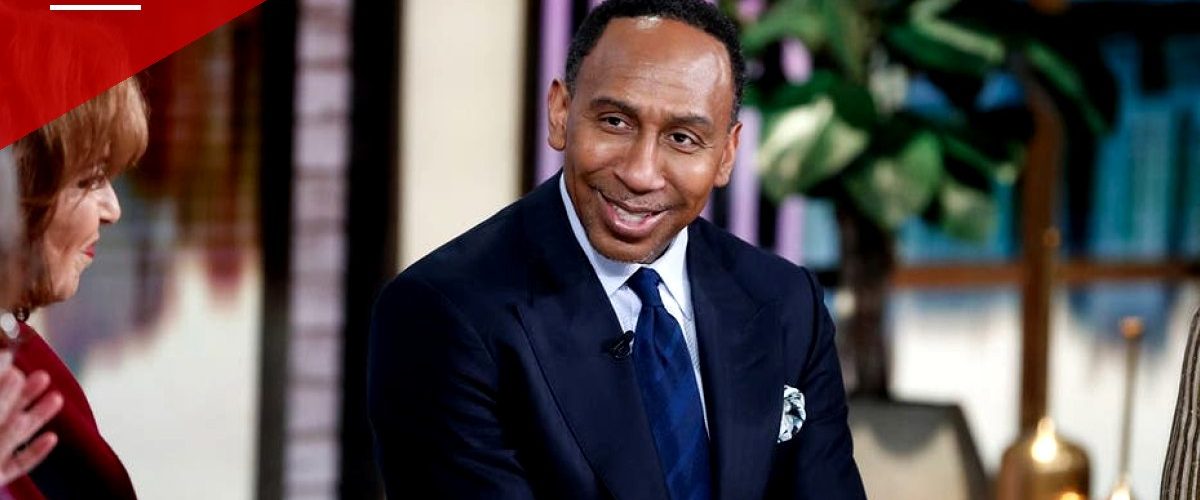
ESPN’s Stephen A. Smith recently declared that the Los Angeles Lakers’ top three players are too White to win an NBA championship. “I do not think that they’re getting past the second round,” he said. “Not a team with its top three players being White dudes.” He has not retreated from the comment, even after former players Jay Williams and Kwame Brown pushed back on it, and he has since argued the players’ race should motivate Black athletes in the league.
Smith kept his job. That outcome is not an anomaly. It is part of a pattern in which disparaging remarks aimed at White people draw little professional consequence, while similar remarks aimed at other groups routinely end careers.
Consider the recent run of comparable episodes. Former NBA player Charlie Villanueva said last month that Dallas Mavericks star Cooper Flagg could not be the face of the league because he is White, framing it as simple math: “It’s a Black league, right? Am I lying? Majority rules.” In June, former ESPN host Jemele Hill answered a social media question asking what people would do if they woke up White by saying she would “apply for a job with a great salary knowing I have no qualifications and will get the job.” Last year, then-Democratic Rep. Jasmine Crockett told CNN that “mediocre white boys” produce “white tears” when they cannot compete with more qualified minority candidates.
None of these remarks produced suspensions, firings, or public apologies demanded by employers.
Compare the penalties
Now set those episodes against cases involving other races. In July, Toronto Tempo coach Sandy Brondello, who is Australian, complained to referees that Angel Reese was being treated as a “protected species” after a disputed foul call — an Australian sports idiom for an athlete who gets favorable treatment. The remark was read by some as racially charged. Brondello issued a public apology acknowledging its impact on Black women, and the WNBA suspended her one game without pay.
In October, Braiden Bell was fired as the Portland Trail Blazers’ play-by-play announcer less than 12 hours after being hired, after a local television station surfaced tweets he had posted in 2012, when he was 15 years old, including one stating, “I’m not racist at all…But not gonna lie…Asian people piss me off!”
By contrast, Sarah Jeong was hired by The New York Times editorial board in 2018 despite a documented history of tweets disparaging White people, including one in which she said she got a “sick” amount of joy from being cruel to old White men. The Times called the comments inappropriate but kept her on.
A teenager’s offensive tweet cost a broadcaster his dream job within hours. A journalist’s comparably ugly remarks about a different group did not cost her a prestigious one.
Where the line gets blurry
None of this means jokes referencing race are inherently off-limits, or that every comment about White people constitutes bigotry. A 2022 episode of “Ted Lasso” included a line asking whether miniature golf is better than watching polo with “a bunch of old white men” — a joke really aimed at men behaving badly, with race tacked on as if it were itself part of the punchline. Nobody treated that as controversial.
The point isn’t that Stephen A. Smith is a racist, or that every one of these comments was malicious. It’s that the threshold for consequences depends heavily on whose race is being generalized. Say something careless about White people, and it passes as commentary or comedy. Say something comparably careless about almost any other group, and it can end a career the same week.
Add comment