
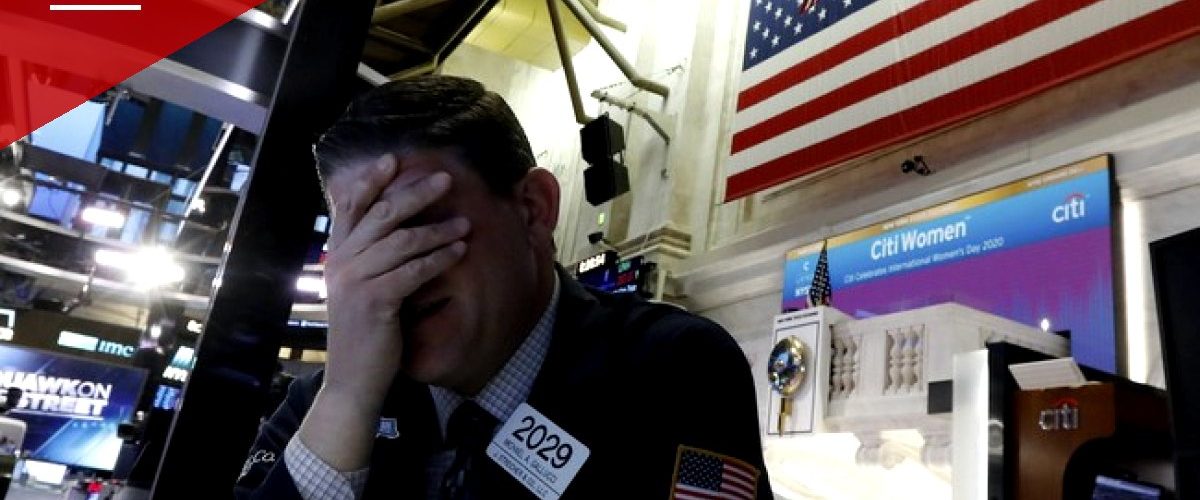
U.S. stocks suffered their worst week since 2020 on Friday as a wave of pressures hit the artificial-intelligence-driven rally that has powered markets for much of the year. The Nasdaq Composite fell 5.28% to close at 22,617.73, turning negative for the year with a 2.7% year-to-date loss. The S&P 500 dropped 3.7% to 6,910.39, and the Dow Jones Industrial Average fell 949.73 points, or 1.93%, to 48,147.33. Both the S&P 500 and the Dow are now down 10% from their closing records.
For the week, the Dow fell 8%, its worst performance since 2020. The Nasdaq dropped 10%, and the S&P 500 plunged 8.6%. According to one widely circulated market post, the S&P 500’s decline erased roughly $6 trillion in market capitalization over the week, marking its first seven-day losing streak since the 2020 pandemic.
The slide followed the IPO of AI company Anthropic, which went public Thursday in a closely watched debut. Rather than extending the AI rally, the listing appeared to prompt investors to take profits, with Anthropic shares tumbling just a day after their Wall Street debut and reviving concerns about stretched valuations across the tech sector.
Multiple pressures at once
Tech analyst Dan Ives described the sell-off as a “perfect storm” resulting from several forces hitting markets simultaneously. In a post, Ives listed the contributing factors as:
This sell-off has been driven by a perfect storm created by: 1) The Blue Tidal Wave win and fears about an anti-AI/anti-datacenter DC, 2) losing the global leader of the AI Revolution Jensen in his black eye moment, 3) China driven regulatory concerns across the rest of semis/memory stocks (e.g. AMD short report yesterday), 4) multiple market clearing events which have just led to more selling, 5) Anthropic IPO being a massive success but marginally reducing liquidity from other tech names, 6) significant fund P&L pain diminishing buying power, and 7) sticky inflation and hawkish Fed speak with concerns around more hikes and constricting financial conditions. The $4 trillion AI buildout is still happening and our tech thesis into 2027 remains.
Among the factors Ives cited was the recent resignation of Nvidia CEO Jensen Huang amid sexual-misconduct scandals. Nvidia has been the leading chipmaker in the AI boom, and Huang’s departure has unsettled investors in semiconductor and memory stocks more broadly, alongside separate regulatory concerns tied to China and a short-seller report on AMD.
Investors are also weighing the possibility of another interest-rate increase from the Federal Reserve, which meets in December, as inflation remains elevated. Ives noted that hawkish commentary from Fed officials about further hikes and tighter financial conditions has added to the pressure on tech valuations.
Separately, the week also saw system outages affecting airline travel, banks, and other sectors, adding to a broader sense of instability around technology infrastructure.
It remains unclear whether the sell-off marks the start of a longer downturn or an overdue correction that will stabilize. Markets will reopen Monday, offering the first indication of which direction the pullback is likely to take.


Add comment