
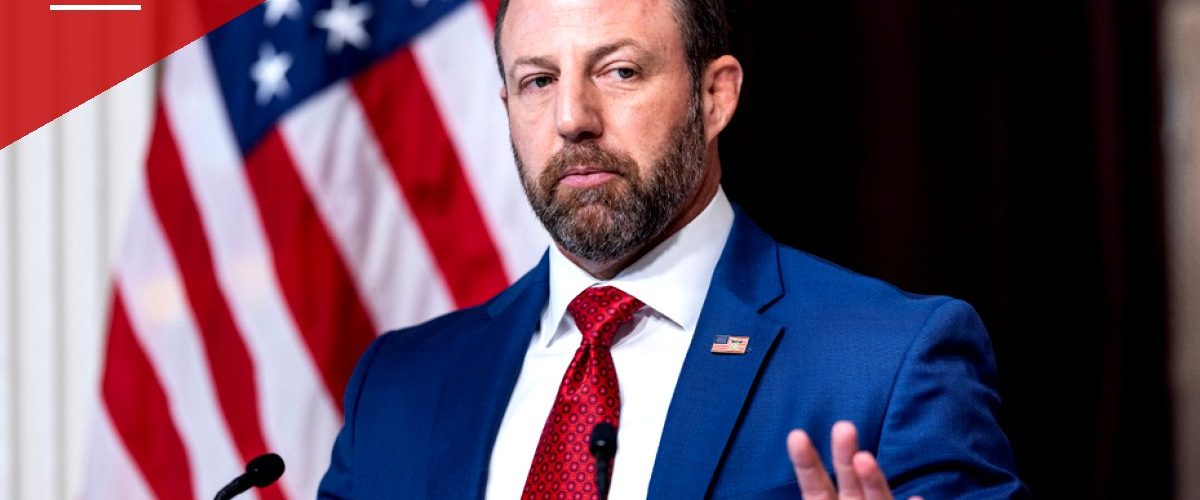
Department of Homeland Security Secretary Markwayne Mullin told Americans to “breathe” after a wave of technology failures disrupted banks, airlines and email services across the country, insisting the homeland remains secure.
“Well, breathe. The homeland is secure. Our banking system is secure and when something like this happens, we’re able to react and react fast,” Mullin said Monday on “Hannity.”
His comments came as customers reported trouble accessing online banking at Wells Fargo, Chase, U.S. Bank and Bank of America on Monday. United Airlines also suffered a widespread system outage that briefly affected departing flights that day.
The disruptions follow a nationwide ground stop ordered by the Federal Aviation Administration on Friday, which caused widespread flight delays and cancellations, and a separate Microsoft outage last week that knocked out Outlook email service.
Mullin said the incidents were “individually unrelated” and were not the work of hackers.
“I can tell you with 98% certainty we’re not seeing the cyberattack,” Mullin said. “We’re not seeing the footprints going in. We’re not seeing the footprints going out. And so, nothing points to it being connected.”
Downdetector.com showed four banks reporting outages Monday. JPMorgan Chase told FOX Business the problems were not related to cybersecurity issues, adding that customers still had access to their accounts and funds while the company worked to fix the issue.
Aging systems under strain
Mullin argued the string of disruptions points to deeper weaknesses in old infrastructure now being pushed harder by new technology.
“We just have a lot of technology thrown at us and our world runs on technology now,” Mullin told host Sean Hannity. “We used to have backup systems and the backup systems are overwhelmed by the new systems now.”
Mullin said a technology expert briefed him Monday and raised the possibility that “super intelligence” contributed to the outages. Mullin said the theory “kind of makes sense” to him.
“He said, because these programs aren’t designed to work as fast as SI is. And so when they put in a program that’s able to write codes, and it goes in and it self-fixes itself, as it starts self-fixing itself, it’s like doing a change order on a house. When you change one thing in a house, everything else starts changing. That’s a ripple effect,” Mullin explained. “It causes these systems to be overrun that weren’t designed to run as fast as the SI technology is today.”
Mullin defended the Trump administration’s handling of the disruptions and pledged federal resources to help companies working through technology problems.
“We are very secure, and I feel very comfortable about where we’re at,” he said.



Add comment