
Supporters of guaranteed income programs are pointing to recent midterm election results as evidence their cause is gaining political traction, after several former members of the Mayors for a Guaranteed Income (MGI) coalition won statewide and federal races.
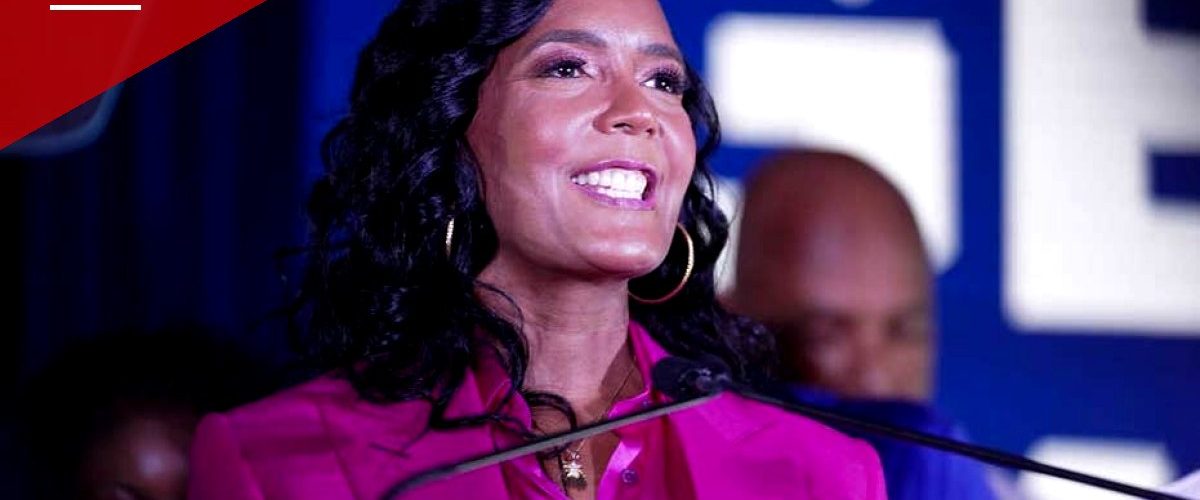
The highest-profile win came in Georgia, where former Atlanta Mayor Keisha Lance Bottoms, a founding member of MGI, was elected governor. She is the first Black woman elected to lead the state.
MGI President Michael D. Tubbs, who served as mayor of Stockton, California, from 2017 to 2021, said the movement’s momentum has been building since the group launched its first pilot program in 2019.
“Support for guaranteed income has been steadily growing since we launched the first pilot in 2019,” Tubbs said. “Previous polling showed a majority of voters support direct, unconditional cash assistance, and now we’ve seen several champions who led guaranteed income programs at the local level ascend to higher office in the most recent elections. I hope the newly elected Democratic House and Senate will continue to prioritize affordability and make guaranteed income a permanent policy for Americans.”
MGI says more than 60 bills involving cash-based policies similar to guaranteed income have been introduced across 15 states. Two current MGI members won seats in the U.S. House of Representatives in the midterms. Counties for a Guaranteed Income (CGI), a sister network Tubbs also founded, says two of its own prominent members were elected to higher office as well.
Cook County, Illinois, has drawn national attention for what officials described as the nation’s first permanent guaranteed-income program at the county level. With federal pandemic-era funding from the American Rescue Plan Act now exhausted, the Cook County Board of Commissioners voted to approve $7.5 million in local tax dollars for the program as part of its fiscal year 2026 budget.
Tubbs has previously argued that the federal government should adopt a similar direct-cash program. Speaking in March, he tied the push to broader economic and foreign-policy grievances.
“We have wars in Iran, regime change in Venezuela. We get it, the healthcare system and the big, ugly bill,” Tubbs said. “So people are saying that social safety is being frayed. That wealth is further being taken from the many and given to the few, and there has to be a government solution because this is a government-caused problem … inflation, unaffordability, this is all a direct result of government policy.”
According to MGI, more than 100 guaranteed-income pilot programs have launched nationwide since 2018, backed by a coalition that now includes more than 150 mayors. Many of these pilots offer participants as much as $1,000 a month with no restrictions on how the money is spent. With the one-time federal relief money that seeded many of these programs now gone, local governments face the question of whether they can sustain the payments through ongoing local tax revenue.
Other advocacy groups are pressing for permanent, taxpayer-funded programs at the state and federal level. The Economic Security Project, founded in 2016, says it has backed more than 100 guaranteed-income pilots nationwide. The group’s director of cash initiatives, Shafeka Hashash, pointed to two other midterm results as wins for the movement.
In Michigan, Dr. Abdul El-Sayed won the U.S. Senate race after a campaign built around the slogan “Money out of politics. Money in your pocket.” Hashash noted El-Sayed spoke at the 2024 Guaranteed Income Now conference and contributed to the group’s 2025 report on cash assistance and family health. El-Sayed’s broader campaign platform focused on universal health care through Medicare for All, raising the federal minimum wage, and strengthening safety-net programs.
In Ohio, Sen. Sherrod Brown, a longtime backer of the Child Tax Credit, won re-election. Hashash said eight of the ten newly elected Democratic senators have gone on record supporting the Child Tax Credit and included it in their campaign platforms.
Fox News Digital reported that it reached out to several of the newly elected officials named in this story, including Reps.-elect Biss and Cognetti, but none responded to requests for comment.
Add comment