
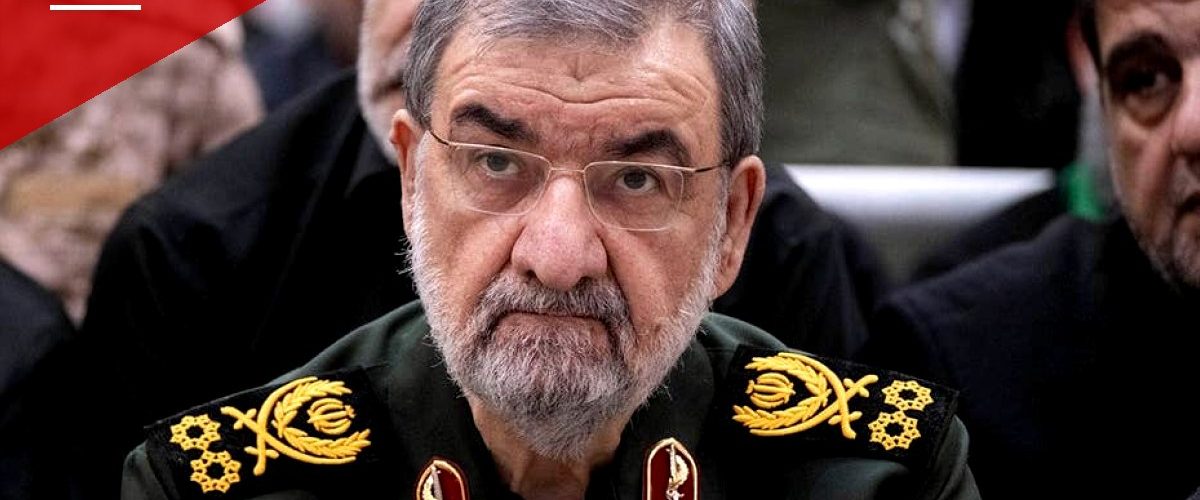
A resurfaced 2006 interview with Mohsen Rezaei, Iran’s top security official and a key aide to Supreme Leader Mojtaba Khamenei, is drawing new attention as Washington pushes for renewed negotiations with Tehran.
Rezaei, secretary of Iran’s Supreme National Security Council and a former commander of the Islamic Revolutionary Guard Corps (IRGC), told the Iranian outlet Baztab in 2006 that negotiations between adversarial states could take decades. An English translation of the interview is preserved by George Washington University’s National Security Archive.
“Ceasefire means an unfinished war,” Rezaei said at the time, discussing the 1980-88 Iran-Iraq War, in which he helped shape Tehran’s military strategy. Asked whether both sides would hold their positions while negotiating, he replied: “Yes. Negotiations can take 30 to 40 years and during that time Iran and Iraq should be prepared to fight.”
That war ended when Iran’s then-supreme leader, Ayatollah Ruhollah Khomeini, accepted a U.N.-brokered cease-fire he likened to drinking from a “poisoned chalice.”
A Letter From Vance
Nearly two decades after that interview, the Wall Street Journal reported that Vice President JD Vance sent Rezaei a letter in October proposing renewed peace talks between the United States and Iran. Iranian state media confirmed Tehran received the letter but has not responded. The semi-official Tasnim News Agency said Iran was waiting for U.S. compliance with its conditions, warning that “any position that contradicts this framework is unacceptable.”
Rezaei has continued to take a defiant public posture toward Washington. In a Nov. 9 post on X, he wrote: “The war on Iran has already wrecked the US government,” adding that “Washington flails like a desperate gambler.”
“FOLD YOUR HAND. STOP manufacturing FAKE NEWS about imaginary talks. Stop denying the West Asian NEW ORDER. Time to SURRENDER to the seven conditions Iran has repeatedly set out.”
Following the Nov. 3 U.S. midterm elections, Rezaei claimed Iran had defeated Washington both militarily and politically, warning of a “devastating response” to any further attack and again calling on Washington to “SURRENDER.”
He has also rejected reports of ongoing U.S.-Iran negotiations or a planned meeting in Qatar, accusing Washington of spreading false claims to ease economic pressure and lower oil prices. Rezaei has said Tehran will not reopen the Strait of Hormuz until its seven conditions are met.
Trump’s Posture
President Donald Trump posted on Truth Social in June that Iran had taken too long to come to terms and would “pay the price.” On Monday, Trump said Iran wanted a deal but warned that another U.S. strike could be roughly five times larger than the previous one.
“We could knock it out fast, or we could knock it out over a short, not a long period of time,” Trump said during a C-SPAN interview on “Washington Journal Primetime.” “I can tell you that Iran would like to make a deal, and we’ll find out whether that’ll happen.”
A Four-Decade Career
Rezaei commanded the IRGC from 1981 to 1997, overseeing operations through the Iran-Iraq War, and has spent more than four decades in Iran’s defense establishment. In the 2006 interview, he described how Iranian leaders separated public rhetoric from military strategy, noting that while officials publicly called for “fighting till Saddam is toppled,” Tehran’s actual strategy was “fighting up to a victory” aimed at strengthening its negotiating position. “The world did not pay attention to the slogans,” he said, adding that foreign governments and intelligence agencies focused instead on Iranian leaders’ actions and diplomatic positions. He also said Iran struggled to convert battlefield gains into diplomatic wins because it lacked international alliances and influence at the United Nations.
The Trump administration first sanctioned Rezaei on Jan. 10, 2020, under an executive order targeting senior Iranian officials appointed by the supreme leader. He has also been accused of involvement in the July 1994 bombing of the Argentine Israelite Mutual Association Jewish community center in Buenos Aires, which killed 85 people. Interpol approved an Argentine request for a Red Notice against him in 2007 in connection with the bombing.


Add comment