
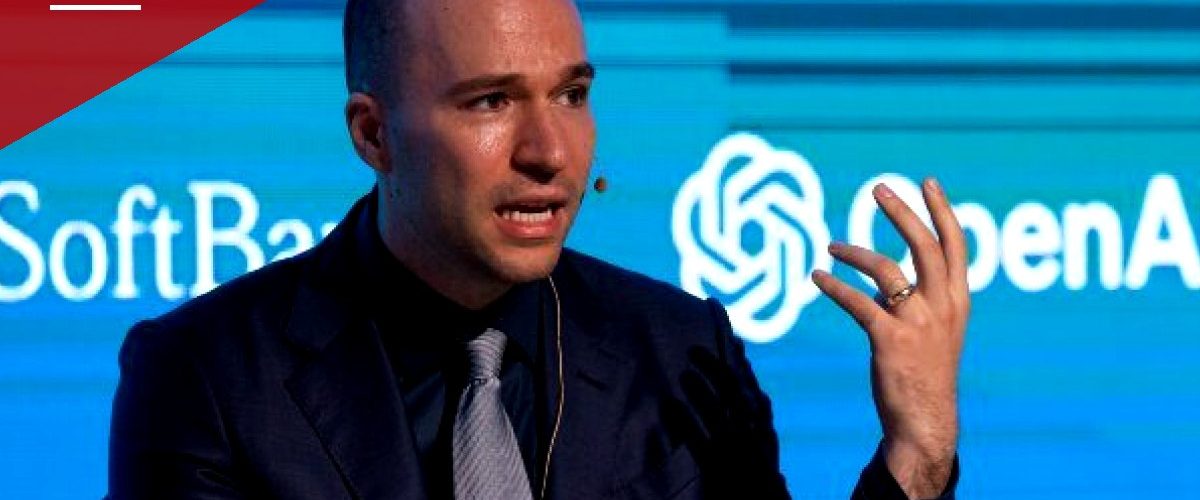
Greg Brockman, co-founder and president of OpenAI, told attendees at a WSJ Tech event that artificial intelligence is on the verge of major medical breakthroughs, and suggested the technology could eventually make death itself a matter of choice.
According to TechSpot’s report on the event, Brockman acknowledged that promises of AI-driven disease cures have circulated since ChatGPT’s launch and have become something of a cliché in the industry. But he argued the field is now close to making good on that promise.
“Having cures for diseases is something that’s become also a trope in this field, but I think that you’re gonna see real delivery and real significant strides and impacts on biology, health, and curing of diseases over the next 12 months, 18 months,” Brockman said.
He then went further, floating the idea that continued AI progress could eventually give people the option of avoiding death altogether.
“I think that we all suffer, that the question of even just thinking about death becoming a choice. All of this is possible,” Brockman said.
Brockman is not alone in making sweeping predictions about AI’s power over human biology. Shyam Sankar, chief technology officer at Palantir, said last month that some AI researchers are so convinced the technology will cure cancer that they’ve taken up smoking as a result. Sankar described the mindset as “kind of this mass psychosis social delusion.”
Futurist Peter Diamandis has made similar claims, pointing to 2030 as a turning point for human longevity and urging people to simply survive long enough to benefit from coming breakthroughs rather than dying “from something stupid” in the meantime. Diamandis has referred to a convergence of AI-driven technologies he calls “longevity escape velocity.”
Biohacker millionaire Bryan Johnson, known for his extensive anti-aging regimen, has said AI is among the technologies that could eventually mean no medical condition is presumed incurable. Elon Musk has also weighed in, arguing that the human body ages as one synchronized system — pointing out that nobody has an old left arm and a young right arm. Musk has said humans are “programmed to die,” but has suggested that programming could potentially be changed to extend human life significantly.
Recent developments feeding the hype
The predictions come amid a string of notable AI developments. The co-founder of CentOS recently built a Linux-compatible kernel in just 11 days, with AI handling most of the coding work. An AI-developed drug appeared in a clinical trial to make patients biologically younger. And Anthropic’s Claude model, while attempting to solve the long-unproven Riemann hypothesis, failed to crack it but produced an unexpected new finding in the process.
Executives at the biggest AI companies continue to make grand pronouncements about their technology’s future even as those same companies push for government regulation of the industry. The claims highlight a tension at the heart of the AI boom: genuine scientific promise sitting alongside bold, unverified projections about reshaping human life itself.

Add comment