
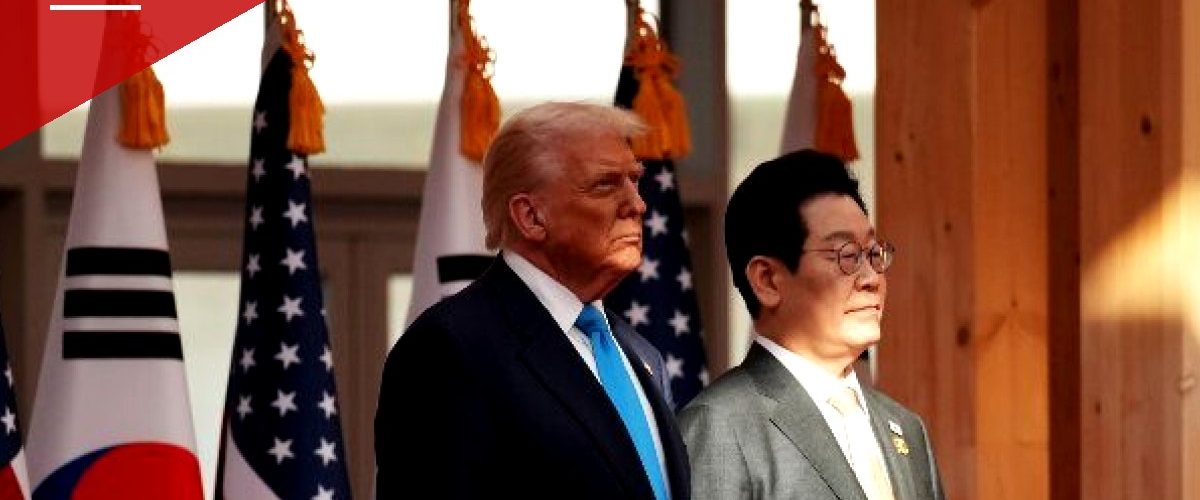
American business groups are warning federal trade officials that South Korea’s antitrust regulator is enforcing the law unevenly against U.S. companies, souring an economic relationship that includes major Korean investments in Texas and Georgia.
The complaints surfaced in public submissions to the U.S. Trade Representative’s annual National Trade Estimate Report, filed last week. Trade associations and corporate leaders told USTR that the Korea Fair Trade Commission, led by Chairman Ju Biung-ghi, is applying tougher scrutiny to American firms than to domestic ones.
The criticism comes even as Korean conglomerates have expanded heavily in the United States with the benefit of state subsidies, including Samsung’s multibillion-dollar chip project in Texas and Hyundai’s electric vehicle complex in Georgia. U.S. investors in South Korea say they face punitive administrative treatment that appears tied to the nationality of their corporate boards.
Seoul has pressed Washington for guaranteed returns, tariff cuts and visa carve-outs tied to U.S.-proposed projects, while rejecting accusations of discriminatory treatment against American firms on grounds of what it calls “judicial sovereignty.”
New Rules in the Works
Rather than easing those concerns, the KFTC under Chairman Ju is advancing new digital platform competition legislation along with harsher penalties. Ju is reportedly facing resignation calls from opposition lawmakers in Seoul who question his agency’s impartiality, but he has continued pushing the agenda that critics in Washington describe as an escalating anti-American economic posture.
Research examining a decade of KFTC enforcement, conducted by the Information Technology and Innovation Foundation and the Computer & Communications Industry Association, found U.S. companies face penalties four to seven times higher than Korean peers relative to their business activity.
- American firms made up under 5 percent of the economic activity measured by CCIA but paid roughly one in four dollars in KFTC fines.
- ITIF found the average fine against an American firm approached $29 million, compared with $1.4 million for Korean firms.
- Chinese companies accounted for less than 1 percent of penalties against foreign firms, while American companies absorbed more than 81 percent.
A separate analysis by the research group Competere estimated that South Korea’s enforcement approach could trigger nearly $1 trillion in combined economic damage, with the U.S. absorbing more than $500 billion in cumulative losses while Korea’s own GDP per capita and broader economy also take a hit.
A Broken Promise, Critics Say
The dispute arrives as the two countries approach the one-year anniversary of a November 2025 joint fact sheet laying out the Korea Strategic Investment and Trade Deal, in which Seoul formally committed to non-discrimination against U.S. companies and procedural fairness in antitrust enforcement.
Business groups argue Seoul is now moving in the opposite direction, treating major U.S. firms and investors — including Google, Meta, Netflix and Coupang — as targets rather than partners. They say that approach is straining the economic foundation of the alliance at a time when security dynamics across the Indo-Pacific remain unsettled.
Lawmakers from both parties have taken notice. Rep. Susan DelBene (D-WA), Rep. Jim Jordan (R-OH) and Secretary of State Marco Rubio have all raised concerns, putting pressure on incoming legislators and new Democratic leadership in the House and Senate to respond.
Business groups are urging USTR and lawmakers to hold Seoul to its bilateral commitments, warning that unchecked regulatory overreach could undermine a partnership built on decades of investment flowing both directions across the Pacific.
Add comment