
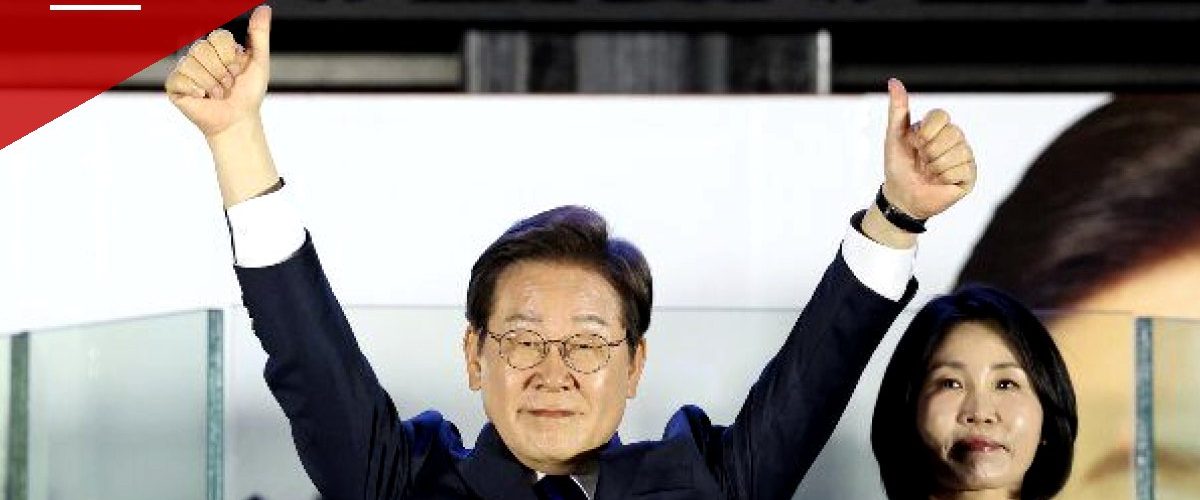
A new report says South Korea has spent $363 million lobbying U.S. officials over the past decade, with South Korean state entities funding more than $236 million of that total through lobbying firm retainers, influence campaigns and direct outreach to lawmakers.
The report relies on data from OpenSecrets and was written by Brody Mullins, a Washington lobbying expert and former Wall Street Journal investigative reporter who won the 2023 Pulitzer Prize for Investigative Reporting.
OpenSecrets data shows South Korea has ranked among the top ten foreign governments lobbying the United States for years, in the same company as Saudi Arabia and China, an economy ten times its size. In 2024, Korea outspent major American corporations including Amazon, Google and Meta on lobbying.
The spending comes as Seoul faces pressure from Washington on several fronts, including a U.S. request that South Korea contribute naval forces to help secure the Strait of Hormuz and a push for Seoul to invest tens of billions of dollars in American projects.
A Utah Senator’s Role
The scale of Korea’s lobbying effort stands out given how the Korean government has treated American tech firms. Sen. Mike Lee (R-UT) has previously described South Korea’s treatment of American company Coupang as “unprecedented persecution.”
Coupang, now South Korea’s second-largest private employer after Samsung, suffered a data breach affecting roughly 33 million customers, which triggered an investigation and lawsuits from investors and consumers. Greenoaks, which owns more than $1.1 billion in Coupang stock, has argued Korea’s actions have cost it hundreds of millions of dollars; Altimeter holds about $210 million in Coupang stock.
“Trade agreements are only as strong as our willingness to stand up for them, and we are acting today to ensure that international competition is governed by rules, not the whims of politicians,” said Neil Mehta, Greenoaks founder and managing partner.
Gaps Between What Seoul Says and What Records Show
The report also points to discrepancies between what Korean officials have told the public about their lobbying spending and what U.S. disclosure records actually show. Korean officials stated that the Ministry of Trade, Industry and Energy spent $3.4 million on lobbying-related activities from 2022 to 2025. Foreign Agents Registration Act records put the real figure closer to $5.4 million.
“These totals far exceed the spending that Korean officials and Korean media have previously reported,” Mullins wrote, noting that under U.S. law, advocacy by Korean state entities like the trade ministry counts as lobbying.
Records show Seoul retained 29 entities and more than 180 registered foreign agents in Washington between 2021 and 2025, including Brownstein Hyatt Farber Schreck, BGR Group, Akin Gump, Mercury Public Affairs and Squire Patton Boggs. Those firms have given Seoul access to a rotating group of former congressional lawmakers, staff and White House officials from both parties.
Access to National Security Officials
Former Rep. Chris Stewart, who served on the House Intelligence Committee, raised concerns about the extent of that access.
“South Korea’s extensive efforts to cultivate influence in Washington deserve greater scrutiny, particularly as Seoul deepens its relationship with Beijing. China has made no secret of its efforts to exploit American alliances and advance its interests at our expense,” Stewart said. “Against that backdrop, the extraordinary access South Korea has secured to senior U.S. national security officials raises legitimate questions about whose strategic interests are being advanced. Congress should take a closer look at whether Seoul’s growing ties with China are beginning to undermine the interests of our alliance.”
Disclosure records show a Mercury lobbyist held a standing weekly phone call for months with Brian McCormack, chief of staff of the White House National Security Council, on behalf of South Korea.
Spending Up, Results Down
Despite the money involved, Mullins’ report finds Seoul’s lobbying spending has not reliably translated into results. Mercury made only two documented contacts for Korea in the second half of 2025 — one with a Department of Homeland Security official and one with a White House aide — while Korea paid Mercury a $120,000 retainer for that period, roughly $60,000 per contact. The filing for the first half of 2026 shows zero documented contacts, yet Korea paid Mercury another $120,000.
Korean officials have separately complained they cannot get the access they need with key U.S. lawmakers, particularly as the House Judiciary Committee investigated Korea’s treatment of American companies this year. Democratic Party Rep. Lee Ki-heon called the lack of access “shameful,” and Korea’s Foreign Ministry suggested the committee’s report was “one-sided” due to limited access.
But disclosure filings tell a different story: lobbyists working for South Korea contacted a key committee staff member roughly a dozen times through June, with Patton Boggs sending a stream of emails, calls and texts. Korean officials also received a closed-door meeting with committee lawmakers to discuss the investigation, according to sources close to the committee.
“For the amount of money South Korea is spending on lobbying and connections they’ve recruited, it’s surprising how little success Korean officials have had in promoting some of their recent positions on trade and national security,” said a former congressional staffer close to the issue. “President Lee should probably be asking himself, is this due to a lack of access, or is it due to a lack of trust from American leaders?”


Add comment