
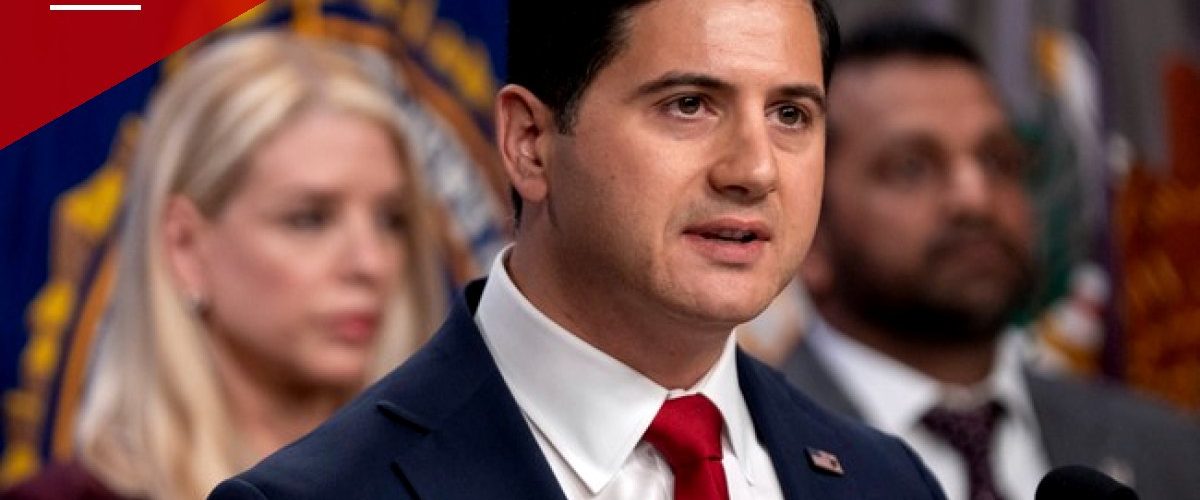
A federal judge in Los Angeles heard nearly three hours of arguments Tuesday over whether California and Los Angeles County must set aside mail-in ballots returned by any of roughly 20,000 voters the Department of Justice has identified as “likely noncitizens,” but declined to immediately order the segregation the DOJ is seeking, instead floating the idea that the ballots could be counted now and any fraud prosecuted afterward.
District Court Judge David Carter did not rule on the DOJ’s emergency motion for a temporary restraining order during the hearing, though he appointed a special master and said he expects to rule sometime Wednesday. He also indicated he plans a fuller hearing in two weeks with expert testimony.
The hearing pitted DOJ attorneys, led by First Assistant U.S. Attorney Bill Essayli, against lawyers for the State of California and Los Angeles County, who argued they could not verify how the list of 20,000 names was compiled, that it contained errors, and that segregating ballots this close to Election Day would be unworkable. Essayli repeatedly offered three DOJ witnesses for testimony and cross-examination, but neither Judge Carter nor the defense attorneys took him up on it.
How the list was built
Sworn declarations filed with the court over the past ten days, from Nicolas Bartell, Associate Director of the Fraud Detection and National Security Directorate at U.S. Citizenship and Immigration Services, and Eric McLoughlin, Assistant Director for the Cyber and Operational Technology section at Homeland Security Investigations, describe how the list was assembled: data cleaning, identity matching, removal of citizens and deceased individuals, manual USCIS review, supervisory sign-off, and law-enforcement screening.
According to McLoughlin’s declaration, Homeland Security Investigations received California’s voter roll from the Department of Homeland Security in March 2026, along with a transmittal email from the California Secretary of State’s office. One declaration states the underlying data was current as of August 2025, though it remains unclear exactly when California first transmitted the voter file to federal authorities.
Bartell’s supplemental declaration identifies the third-party database used to enhance the voter data as LexisNexis’ Accurint, which the declaration says pulls from thousands of sources and compiles between 65 billion and 92 billion records, including phone numbers, addresses, court filings, property deeds and motor vehicle data. The service is used by law enforcement and government agencies nationwide.
A dispute over a 200-name sample
Los Angeles County Registrar Dean Logan’s office says 7,035 of the 20,000 flagged names are in Los Angeles County. From that group, Logan’s office pulled a sample of 200 records and found 42.9 percent were canceled registrations, 42.4 percent were active, and 4.6 percent were inactive. Only 86 of the 200 had ballots mailed to them for the November 2026 election, and among records where birthplace information was reported, the county says 38.9 percent indicated the person was born in the United States.
Bartell’s team reviewed the same county sample and reached a different conclusion. According to his declaration, USCIS identified 51 individuals on the DOJ’s list where California’s voter roll indicated the person claimed U.S. birth. After reviewing immigration records for all individuals on the county’s sample list, USCIS determined that none of the people it matched were born in the United States according to its records. A re-review found four subjects who might have a claim to citizenship — three potentially through a parent, not by U.S. birth — and one person determined to be deceased.
A registrar says segregation is feasible
Shasta County Registrar of Voters Clinton Curtis submitted a declaration for the DOJ stating that “locating and segregating challenged ballots is entirely possible and not problematic.” Curtis described a system that flags voters based on eligibility concerns, including citizenship questions, so that sorting machines automatically separate flagged ballots before processing. He added that if that system weren’t used, the same result could be achieved by manually issuing a new ballot not sent to the voter and marking the old one void, which he said effectively sequesters it without discarding it.
Neither Bartell nor Curtis was called to testify despite being present and available, according to the hearing.
The judge’s reasoning
Judge Carter suggested during the hearing that prosecution after the election, rather than segregation beforehand, might be the appropriate remedy, pointing to a
Add comment