
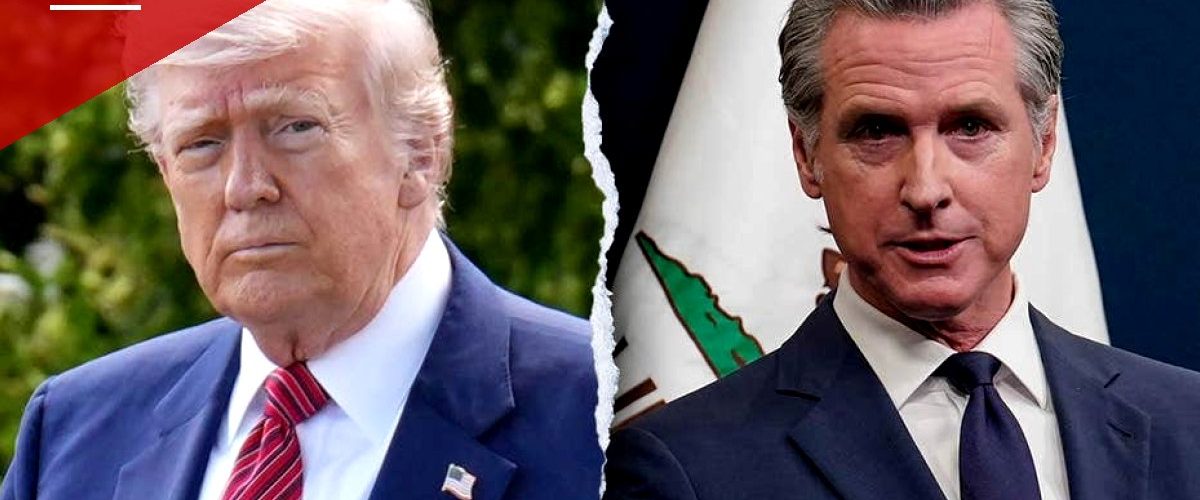
California Gov. Gavin Newsom has signed a bill imposing a 25% tax on the gross income of private detention facilities operating in the state, a measure aimed squarely at companies that contract with Immigration and Customs Enforcement (ICE).
“If we can’t kick out private facilities, we’ll go after their profits,” Newsom said in a press release announcing the measure.
The law, AB 1633, was one of 20 bills Newsom signed on Tuesday. It applies to any private detention facility holding federal, state or local contracts, and the revenue it generates will flow into a “Due Process for All Fund” earmarked for immigration-related services. The tax does not take effect until July 1, 2028.
California currently hosts eight ICE detention facilities, all privately operated, according to Department of Homeland Security data. The GEO Group owns five of them; Imperial Valley Gateway Center LLC owns another. The remaining two were purchased by DHS in July but are run by CoreCivic under contracts extending to 2027 and 2029.
Concerns Over Shrinking Detention Capacity
Hans von Spakovsky, senior legal fellow at Advancing American Freedom, warned the tax is designed to drive private operators out of the state entirely rather than simply raise revenue.
“It’s very clear that there’s only one purpose to this California gigantic tax increase, and that is to make sure that the federal government cannot find any private property owners, any private contractors in California that are willing to lease space to the federal government,” Spakovsky said.
Spakovsky said the federal government has roughly 66,000 detention beds nationwide, and losing California’s private contractors could meaningfully shrink that capacity. He suggested the government might respond by converting federally owned properties, including warehouses or office space, into detention sites, since California cannot tax federal land.
He also raised the possibility that ICE could shift operations to neighboring states. “I’d go to Arizona. I’d potentially go to Nevada. I’d go to other states where they might be eager for federal government money and the increased employment from private contractors hiring people to work on these facilities,” Spakovsky said.
Additional Restrictions Signed
Newsom also signed measures banning what he called “the Orwellian practice of using shock gloves in enforcement activity” and expanding protections for access to California’s court system.
“We may not be able to dictate federal immigration policy, but we can make clear that activities taking place in California will be subject to California law,” Newsom said.
Despite the 2028 effective date, Spakovsky suggested the federal government may begin searching for alternative detention arrangements well before then. Newsom’s office did not immediately respond to a request for comment.


Add comment