
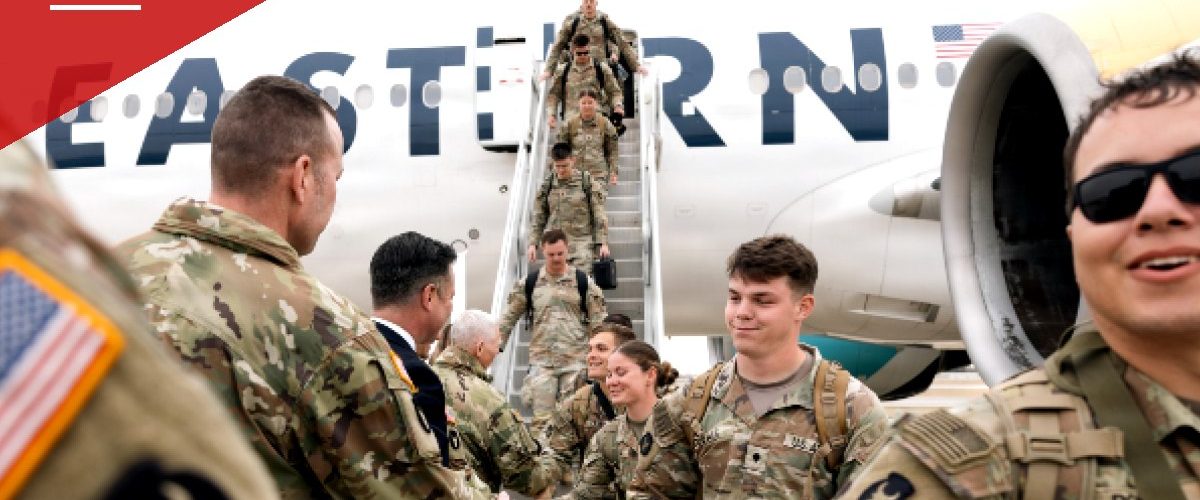
The Pentagon announced Wednesday that it has formally concluded Operation Inherent Resolve, the twelve-year military campaign against the Islamic State in Iraq, and that the last American and British forces have withdrawn from the country in recent weeks.
Pentagon spokesman Sean Parnell said the move “reflects the success of a 12-year campaign that defeated ISIS as an organized military threat in Iraq and across the region.” He described it as a shift “from a wartime coalition mission to an Iraqi-led security effort supported by a more normal bilateral security relationship.”
Going forward, Parnell said, Iraqi Security Forces, including the Peshmerga and other forces in the Kurdistan Region, will lead efforts to keep ISIS remnants suppressed, with the U.S. military providing training and intelligence support rather than combat forces. “The primary responsibility for addressing Iraq’s remaining security challenges, including ISIS remnants and Iran-aligned militias that undermine Iraqi sovereignty and regional stability, now rests with the Government of Iraq,” he said.
A Campaign That Outlasted Its Founder
Operation Inherent Resolve began in August 2014 with U.S. airstrikes as the Islamic State seized vast stretches of Iraq and Syria to build its self-declared caliphate. Most American troops had already left Iraq during the Obama administration, but Washington assembled a coalition of dozens of partner nations to “degrade and ultimately destroy” the group.
President Obama framed the fight as a generational struggle. President Trump, after taking office, moved more aggressively, and a special forces raid killed ISIS leader Abu Bakr al-Baghdadi in October 2019. “He died like a dog. He died like a coward. The world is now a much safer place,” Trump said at the time.
At its height, the Islamic State controlled roughly a third of Syria and nearly 40 percent of Iraq. Its last territorial stronghold fell in 2019, but the group has persisted as an insurgency in Iraq and Syria, with affiliates active across the Middle East and Africa.
The Iranian Proxy Problem
The war against ISIS also reshaped Iraq’s internal power structure by channeling money, weapons and influence toward Shiite militias aligned with Iran. Baghdad formalized these groups as the Popular Mobilization Forces to fight ISIS, but their deeper loyalty has remained with Tehran, not the Iraqi state.
Iranian Revolutionary Guard Quds Force commander Gen. Qassem Soleimani built much of that relationship before he was killed in a January 2020 U.S. airstrike ordered by President Trump while coordinating attacks on American personnel with an Iraqi militia leader. His successors have kept up ties with the militias, which have since rebranded as the “Islamic Resistance in Iraq.”
The National reported Tuesday that Iraqi officials and regional analysts are uneasy about what follows the formal end of the mission. “Everyone is anxious as to what will happen after the September 30 deadline. Iraq is currently in a fragile situation due to the war between the U.S. and Iran. No one is clear about the future posture of the government, militias, or foreign actors in Iraq,” one Iraqi official said, adding that “relations with neighboring Arab countries are strained, co-operation is minimal, and distrust is high, exacerbated by accusations and complaints among regional states.”
The same official noted the militias have so far resisted disarming, though that resistance could soften once the American presence — long cited as their justification for staying armed — is gone.
Celebration in Baghdad, Worry in the North
Baghdad is treating the conclusion of the mission as a national holiday, marking it as the defeat of ISIS and the restoration of full sovereignty. But the reaction is far less celebratory among Sunni and Kurdish Iraqis, who fear a resurgence of ISIS and continued Iranian pressure through the militias. Some recall that Shiite-led governments in Baghdad have at times treated Sunni communities with suspicion, branding them as collaborators with al-Qaeda or ISIS.
The Kurds, generally the most pro-Western constituency in Iraq, said they would respect Baghdad’s decision but warned that the country still needs an American presence given active Iranian hostility. The Erbil Airbase in Iraqi Kurdistan has been struck repeatedly by Iranian drones and missiles over the past six months.
“The political, security and military situation in Iraq has not yet reached a level of stability that would justify such a withdrawal. We are concerned that the departure of Coalition forces could create a significant security vacuum that terrorist organizations and other extremist groups may seek to exploit,” said the press secretary to Iraqi Kurdistan Prime Minister Masrour Barzani.
Kurdish officials are among the most worried that ISIS could rebuild itself, and that the American withdrawal may hand the group the opening it has been waiting for.

Home-based job that pays more than 12,000 Dollar per month by doing simple tasks on a laptop or mobile device part-time. Last month, I earned 24,863 Dollar from this job by working 4 hours per day online. Very simple jobs to do, and the earnings are insane. Everyone can now make more money online by joining the website listed below…..
𝒋𝒖𝒔𝒕 𝒖𝒔𝒊𝒏𝒈 𝒕𝒉𝒊𝒔 𝒔𝒊𝒕𝒆.. Www.PayAtHome1.Com