
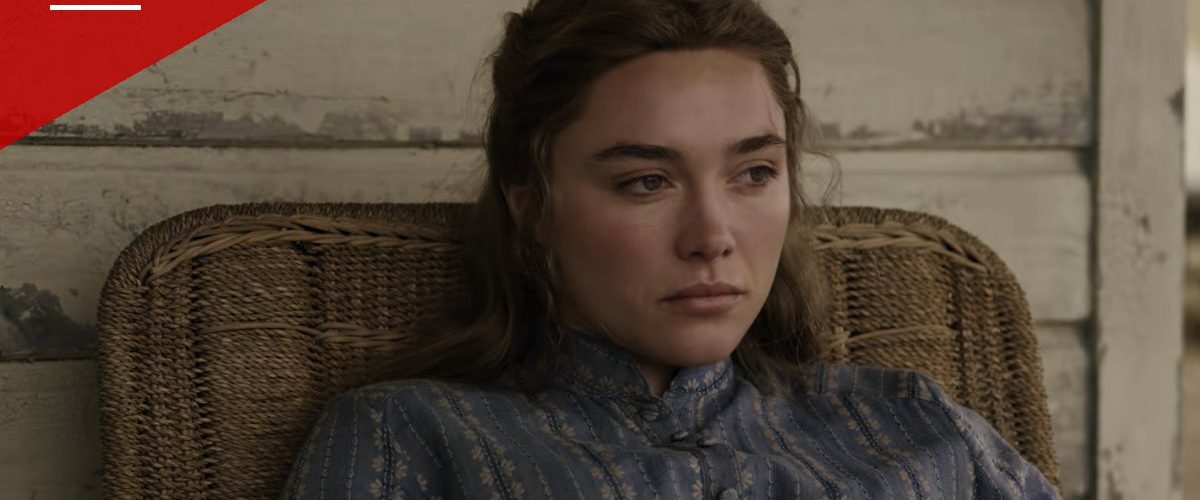
A clip from an Atlantic interview with actress Florence Pugh has set off a wave of criticism online after she described her approach to playing Cathy Ames, the antagonist of Netflix’s upcoming adaptation of John Steinbeck’s East of Eden.
In the interview, Pugh said the show does not try to make Cathy “a monster.” She said it was “my job to try and get you guys to sympathize and maybe fall in love with her a little bit.” Pugh credited series writer Zoe Kazan with that approach, saying Kazan “wasn’t interested in making [Cathy] just a monster. She was interested in understanding her.”
The clip has drawn more than 1.6 million views on X but fewer than 400 likes, and the comments beneath it were largely negative. “This new Hollywood trend of ‘every villain is sympathetic’ is the worst,” one commenter wrote. Another asked, “Did she even read the book?”
How Steinbeck Wrote the Character
In the novel, Steinbeck’s narrator introduces Cathy in stark terms: “I believe there are monsters born in the world to human parents.” He writes that Cathy “was not like other people, never was from birth,” and describes her as having a “malformed soul.” The narrator adds that “there was a time when a girl like Cathy would have been called possessed by the devil.” In a letter to a family friend, Steinbeck himself wrote that Cathy was meant to be “representative of Satan.”
The novel depicts Cathy engaging in manipulation and violence from childhood. At age 10, her mother finds her in a carriage house with two teenage boys, her wrists bound with rope; the boys claim Cathy paid them and tied herself up, but Cathy refuses to speak, and the text leaves open whether she has framed the boys. Later in the book, Cathy murders her own parents. As an adult, she runs a brothel that Steinbeck’s narrator describes as marked by sadistic cruelty, including scenes in which men are whipped and bathed in their own blood — details that, when Faye, the brothel’s original owner, learns of them, leave her screaming.
A Debate Over Adaptation
Critics of the Netflix approach argue that turning Cathy into a sympathetic or “morally ambiguous” figure runs counter to Steinbeck’s intent, which they read as an argument that some acts are simply evil regardless of a person’s background — a theme reinforced elsewhere in the novel by its recurring emphasis on individual moral choice. Some observers have suggested the series may lean on Cathy’s childhood traumas to explain her later actions, though Netflix has not detailed how the adaptation will handle that material.
The controversy adds East of Eden to a list of recent literary adaptations that have drawn criticism for departing from source material, including Emerald Fennell’s Wuthering Heights and Christopher Nolan’s Odyssey. Netflix has not released additional details about the East of Eden series beyond the promotional interview.



Add comment