
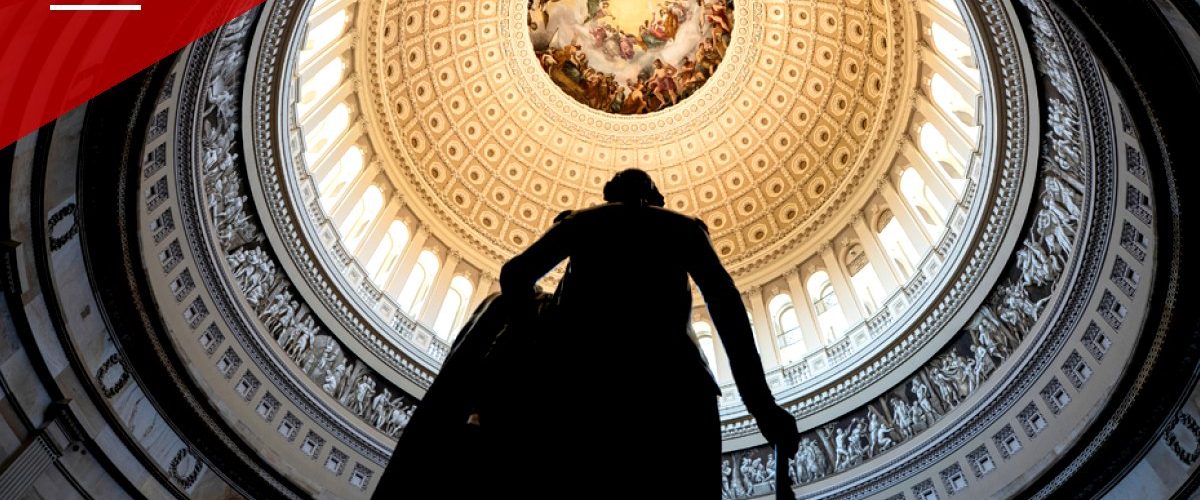
With midterm elections approaching, Republicans and Democrats in Congress are struggling to settle on a message that voters actually care about, according to lawmakers from both parties.
House Majority Whip Tom Emmer, R-Minn., pointed to policies from last year’s tax and spending package as a selling point. “We have accomplished a ton. No taxes on overtime. No taxes on tips. We raised the child care tax credit. The list goes on and on,” Emmer said.
But some Republicans admit they failed to capitalize on that record. “It was a great message last year and we missed the opportunity, in my view, to talk about the good things we did last year,” said Sen. Kevin Cramer, R-N.D. He warned that voters care more about recent results than past achievements. “People’s rearview mirror is getting shorter and shorter all the time,” Cramer said. “What you are going to do for me today is more important to them than what you tried to do a year ago.”
Some in the party are blunt about the political outlook. Rep. Nancy Mace, R-S.C., who is retiring, said, “This midterm is going to be a f—ing bloodbath. I think that both parties know everyone’s putting blame on the Republicans right now.”
Democrats Lean on Costs — and Accountability
Democrats are centering their campaigns on affordability, particularly grocery and fuel prices. “What’s most important to Americans are pocketbook issues,” said Sen. Tim Kaine, D-Va. “And they see the tariff strategy as punishing our allies and punishing their pocketbooks for no purpose.”
But many Democrats are also promising oversight of the Trump administration. Colorado Democratic House nominee Melat Kiros said, “The top priority in these next two years is going to be holding Donald Trump accountable.” House Democratic Caucus Chairman Pete Aguilar, D-Calif., said, “We’ll hold this administration accountable for its corruption,” while Rep. Pramila Jayapal, D-Wash., added, “We will subpoena them if we need to.”
Asked whether investigations could undercut the party’s affordability message, House Minority Leader Hakeem Jeffries, D-N.Y., said, “No, because there’s a cost to the American people around corruption. Which is why the American people are demanding that action be taken and that we hold the crooks accountable.”
Not every Democrat agrees on emphasis. “There are a lot of corruption questions,” said Sen. Peter Welch, D-Vt., “but I think the gold ring, the brass ring, is focusing on affordability.”
No Clear Winner on Message
Sen. John Kennedy, R-La., argued neither party has cracked the code. “We’re lucky because the Democrats don’t have a plan either,” Kennedy said. “Here’s the strategy for both sides. ‘The other guys are worse than me.'”
Some Republicans are returning to border security, a message that worked in the last midterm cycle. “We’re going to tell the story about the closed border. I mean, President Trump has the most secure border in our history,” said Sen. Katie Britt, R-Ala.
Artificial intelligence has also emerged as a late campaign issue. Sen. Chris Murphy, D-Conn., said, “In the next 30 days, as we go into this election, Democrats have an opportunity to basically put AI on the ballot.” Jeffries argued Republicans are ignoring the issue. “This is a serious thing. It requires urgent Congressional action and Republicans are abandoning their responsibility,” Jeffries said. “Democrats will not do that.”
A Fight Over Utility Bills
Sen. Jon Husted, R-Ohio, who faces a competitive race this fall, tried to link AI concerns to affordability. The House passed the Ratepayer Protection Act by a vote of 417-3, a bill meant to shift utility costs tied to data centers away from ordinary consumers and onto the tech companies that operate them. “If you create the cost, you should pay the cost,” Husted said.
But Sen. Martin Heinrich, D-N.M., the top Democrat on the Energy and Natural Resources Committee, blocked the measure in the Senate. “It’s not enough for us to tell states to consider making data centers pay for grid updates, rather than voluntary pledges or suggestions to states,” Heinrich said. “Congress needs to pass real legislation with real teeth.”
Some Republicans believe the blockade could actually help their cause by drawing a contrast with Democrats. “Now there’s a differentiation between Republicans and Democrats. Republicans are looking out for ratepayers. Democrats are not,” Cramer said.
It remains possible the Senate could attempt another quick vote on the measure before lawmakers leave Washington for the midterms, though a full debate with procedural votes could take up to a week. Barring that, the Senate appears likely to adjourn without resolving the data-center cost dispute — leaving both parties room to blame each other on affordability heading into November.
Add comment