
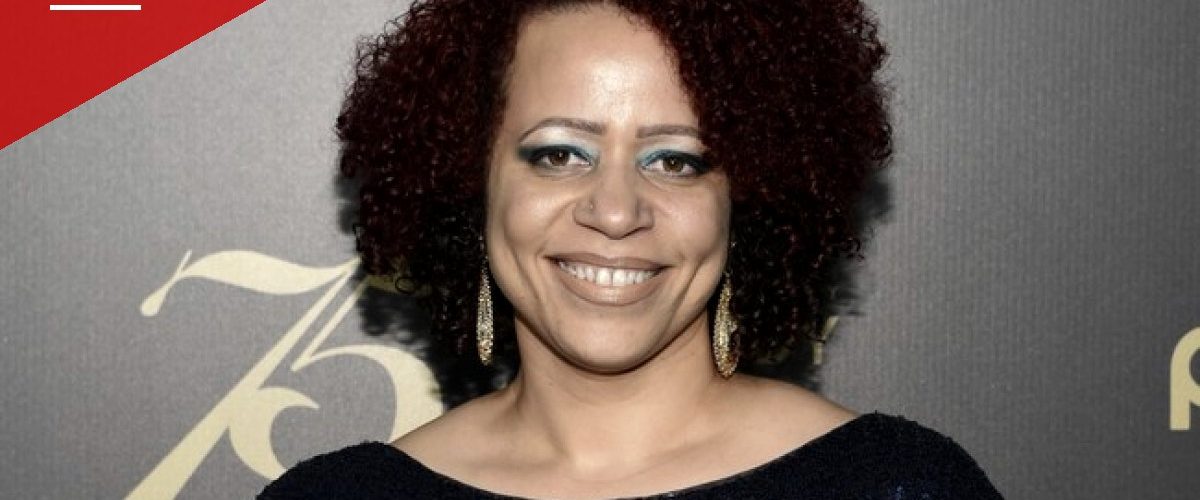
Nikole Hannah-Jones, the New York Times Magazine writer best known for the 1619 Project, has published a personal essay recounting her daughter Najya’s years in New York City public schools. The essay is framed as an indictment of systemic inequity in American education. But the timeline she lays out, in her own words, tells a story that cuts against the conclusion she draws from it.
In 2015, Hannah-Jones and her husband enrolled Najya in pre-K at what she describes as a “segregated, high-poverty school” in Brooklyn. They had the financial means for private school and the standing to secure a spot in a well-resourced zoned school. They chose the Brooklyn school deliberately, as an act of advocacy, hoping their example would draw other well-off families into struggling schools.
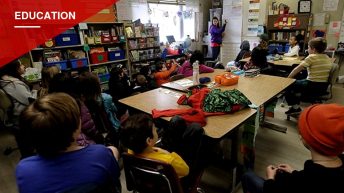
By first grade, Hannah-Jones describes a lunchroom with no adult supervision and unchecked fighting among children. By third grade, a teacher was absent so often that students were sent to sit in the second-grade or kindergarten classroom. By fourth grade, teachers had reportedly stopped grading Najya’s work entirely and, by Hannah-Jones’s account, likely never administered the required reading assessments. Najya believed she was excelling in math. Most of her work was wrong. No one had checked.
Middle school did not resolve the problems. At Urban Assembly Unison, homework was eliminated and an “Algebra for All” policy pushed advanced math onto students, including Najya, before they had mastered the fundamentals. An outside tutor later discovered Najya had not mastered long division or fractions. She received A’s at Unison. She later said, by her own account, that she “didn’t know anything.”
A different ending, once choice entered the picture
As an eighth grader, Najya was finally given the freedom to choose her own high school based on her own criteria. She chose a rigorous, selective school, the kind of institution her mother has spent much of her career arguing against.
The transition was difficult. Najya arrived with real gaps, including the long-division deficit the tutor had already flagged. What closed those gaps was targeted tutoring, teachers who intervened directly, and a school built around academic rigor. By the end of her first year there, she was earning genuine A’s and B’s, and she passed a state exam she had previously failed twice.
Hannah-Jones’s essay closes on the idea that “there is no absolution” for families who secure better options for their own children while others are left behind in failing schools.
There is no absolution.
But the sequence of events she herself documents points the other direction. Seven years in a school with no supervision, teachers who stopped grading work, and instruction built on policy fads left Najya behind. One year in a school she chose for herself, with rigor and real intervention, brought her back.
What the data can’t capture
Hannah-Jones’s essay also documents real problems: underfunded schools, high turnover in high-poverty buildings, and the well-documented pattern that selective public schools in cities like New York skew whiter and wealthier. Those facts are real. They are also not what determined Najya’s experience. What determined it was that her parents, fully informed and financially able to choose differently, kept her in a struggling school for seven straight years before allowing her to choose otherwise.
Families without a Times Magazine platform, tutors on call, and financial cushion don’t get a decade to arrive at that same realization. For them, the absence of choice is not an abstraction, it’s the difference between a child who falls years behind and one who doesn’t. States including Louisiana, Mississippi and Arkansas have expanded school choice tools such as education savings accounts, charter access and open enrollment in recent years, aiming to give families that option before, not after, a decade is lost.

Nothing like handicapping your own child in an attempt to encourage others with money to do the same. This could be considered child abuse in my opinion. Kids were not meant to be political tools or public experiments. Parents are supposedly concerned with providing the BEST opportunities possible for their children. Obviously, this woman failed and failed very badly at that goal.