

A mother who lost her son and his wife in a highway crash told a House Judiciary subcommittee this week that a chain of federal and state decisions — not a single tragic accident — put the truck driver responsible on the road.
Elizabeth Carter testified that her 25-year-old son, Billy Carter, and his 24-year-old wife, Jenny Lynn Lower, died on November 24, 2025, when a semi truck jackknifed across both lanes of Highway 20 in Oregon. The couple, married just 16 days, were driving home from their second wedding reception when they collided with the truck.
The driver, identified as Rajinder Kumar, had crossed the southern border near Lukeville, Arizona, in November 2022. Carter said Kumar was released into the U.S. interior under the Biden administration’s catch-and-release policy, which was enforced at the time by then-Department of Homeland Security Secretary Alejandro Mayorkas.
Carter, who described herself as a lifelong Democrat, told the subcommittee she is “ashamed of what my party is doing,” according to the New York Post.
A License, a Work Permit, a Tragedy
After his release, Carter said, Kumar received a work permit from the Biden administration and a commercial driver’s license from the state of California — even though the federal government objected.
“It didn’t matter to California that the federal government wasn’t okay with him getting that driver’s license. It didn’t matter to California that other states would have no say in whether someone they gave a driver’s license to was on their road. And after coming back from their honeymoon and a second reception in Jenny’s hometown, Billy and Jenny didn’t make it home to their first apartment to start their lives together,” Carter told lawmakers.
Carter argued the entire sequence of events was avoidable. “This would not have happened if, instead of catching and releasing, Mr. Kumar was asked to go through the proper legal process,” she said. She also described the difficulty of getting information when federal and state governments disagree and are legally barred from sharing certain information with each other: “It has been my experience that getting straight answers when your federal government and your state government disagree and are prohibited by laws from talking to each other is nearly impossible.”
Oregon Declined to Hold Him for ICE
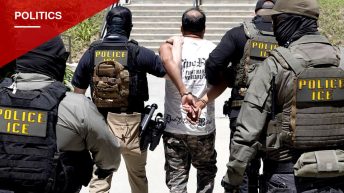
By April 2026, Immigration and Customs Enforcement had placed a detainer on Kumar following the crash, but Oregon — a sanctuary state — declined to cooperate and released him. ICE agents arrested Kumar 20 days later.
Carter told lawmakers the ordeal left her questioning whether American citizens receive the same protections under the law as those who cross the border illegally. “People born in our country deserve a fair trial if their life is lost, and having to fight for that has been a great injustice and left me feeling betrayed by my government,” she said.
The case has drawn renewed attention to state-level sanctuary policies in Arizona, California, and Oregon, and to how licensing and detainer decisions made by state governments can diverge from federal immigration enforcement.


Add comment