
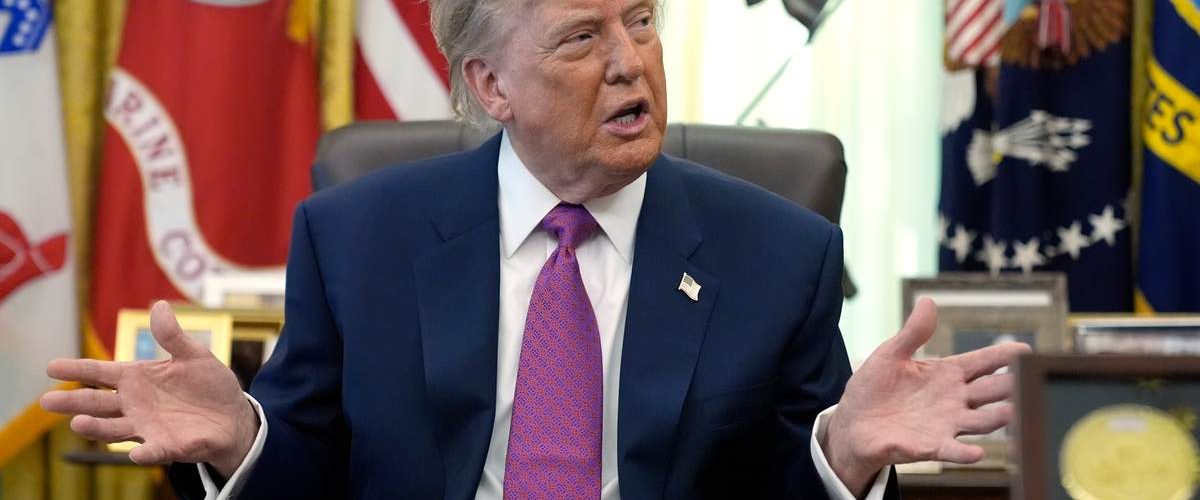
President Trump’s move to rename Lake Ontario as “Lake America” has set off an outsized reaction from Democrats, Canadian officials, and predictable pundits, turning a symbolic executive order into a culture war moment that highlights partisan priorities and political theater.
The president announced the change with characteristic showmanship, and the reaction was immediate and loud. Some leaders treated it as an affront to international norms while others spun it as a distraction from daily governance. The episode quickly became a marker: who is serious about policy, and who prefers outrage as a signal of virtue.
Canada’s response was swift and formal, declaring that Lake Ontario “is and will always be Lake Ontario, and no executive order will change that.” That quote captured the cross-border irritation, and it underscored the reality that geography and treaties do not bend to presidential headlines. The Canadian reaction framed the story as more than a name fight; it was a reminder that allies notice gestures that look like grandstanding.
https://x.com/WhiteHouse/status/2093027464545018109
Back home, Democratic officials predictably went into full meltdown mode, treating the renaming as a constitutional crisis and a provocation. Comments from elected Democrats ranged from indignant denials to performative outrage, with some suggesting they would not recognize the new name. Their rhetorical fury often seemed disproportionate to the act itself, which many Americans viewed as symbolic theater rather than a policy shift.
Representatives from Great Lakes states leapt into the fray to defend the historic name, and several made public statements refusing to accept any change. Those reactions were theatrical and aimed at local audiences, playing well to a base that equates place names with identity. But the larger audience seems less animated; most voters moved on to other concerns, finding the debate less relevant to daily life.
On social platforms and cable, Democrats and left-leaning pundits treated the move as yet another example of presidential lawlessness, while conservative voices framed it as a harmless stunt that exposed liberal priorities. The clash revealed a cultural divide: one side sees symbolic corrections and renamings as moral imperatives, the other views them as hollow gestures that distract from tangible issues like inflation and national security. Each side used the moment to prove a broader point about values and focus.
Some critics tried to turn the story into a question of competence or dignity, mocking the idea that a president could whimsically rename shared geography. Those snide takes missed the point from the conservative side, where supporters argued the action was a clever bit of political theater that put the administration’s brand front and center. Political signaling matters; this administration knows how to make a headline stick and force opponents to react on its timetable.
The spectacle also exposed the performative instincts of many on the Left. From renaming holidays to erasing familiar brands and tearing down statues, progressive energy often channels into symbolic battles. That track record makes the outrage over a name change look hypocritical to some observers, who argue that if names and symbols can be altered in one direction, objections should be consistent across the board.
Republicans largely treated the episode as an opportunity to score points and highlight what they see as misplaced liberal priorities. Conservative responses framed the uproar as proof that Democrats focus on culture fights instead of bread-and-butter issues. The reaction underscored how an ostensibly small act can be turned into a referendum on the opposition’s instincts and priorities.
Meanwhile, many Americans shrugged. Polling and social chatter suggested a majority of voters were uninterested, seeing the row as a sideshow to larger national problems. That indifference is a message in itself: performative outrages lose punch when the public is more concerned about jobs, prices, and safety than about a contested map label.
In short, the Lake America flap became a window into modern political theater. It revealed how a president can weaponize symbolism, how the left reflexively interprets gestures as grievous, and how most citizens often prefer policy over posturing. The episode will likely fade from the headlines, but it left a clear impression of which parties are engaging in substantive debate and which are staging outraged performances.
Lake Ontario is and will always be Lake Ontario, and no executive order will change that. It doesn’t belong to President Donald Trump to rename on a whim.
Our two countries have real trade issues that impact our people. Instead of responding to stunts and distractions, Canadians must stay focused on what we can control: making our economy strong and affordable at home and using our leverage to fight tariffs abroad.

Home-based job that pays more than 12,000 Dollar per month by doing simple tasks on a laptop or mobile device part-time. Last month, I earned 24,863 Dollar from this job by working 4 hours per day online. Very simple jobs to do, and the earnings are insane. Everyone can now make more money online by joining the website listed below…..
𝒋𝒖𝒔𝒕 𝒖𝒔𝒊𝒏𝒈 𝒕𝒉𝒊𝒔 𝒔𝒊𝒕𝒆.. Www.PayAtHome1.Com